www that-bites .org foodies corner? A Complete Guide for Food Lovers
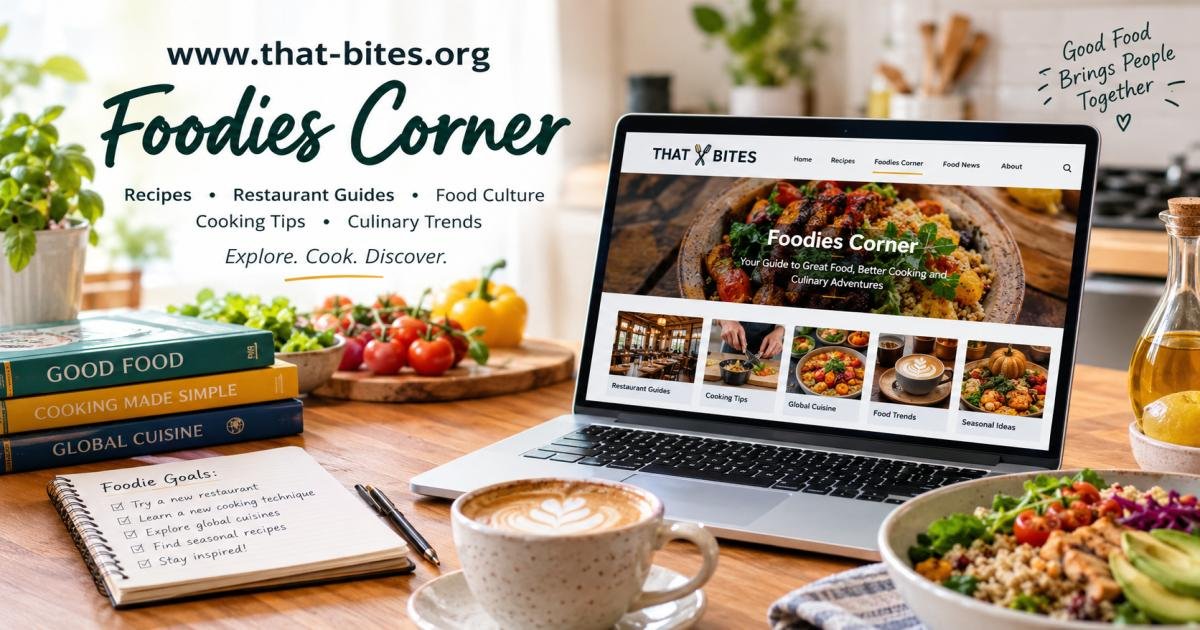
Foodies Corner is a food-focused article section on THAT Bites. It covers restaurant discoveries, cooking methods, coffee, ingredients, seasonal hosting, and food-business topics. The phrase “www that-bites .org foodies corner” refers to this section of the website, not a separate cooking app or meal-planning service.
Its range sets expectations for readers. You can find articles about Winnipeg dining spots, breakfast in Huntersville, rice texture in maki rolls, and coffee for espresso. Rather than serving one narrow interest, the archive brings several food subjects together.
There is one important distinction: an article archive does not prove that every recipe, recommendation, or factual claim has passed expert review. Use the section to discover ideas, then examine the evidence behind the advice you plan to follow.
This guide explains what the category contains, how to browse it, and what to check before relying on an article.
What is www that-bites .org foodies corner?
Foodies Corner is a category within the THAT Bites website. You can find its archive at that-bites.org/category/foodie/. The archive lists article titles, short introductions, bylines, and links to individual posts.
Think of it as a food-reading section rather than a single-purpose recipe collection. Some posts address kitchen questions. Others introduce dining destinations or discuss how food businesses operate.
This distinction helps separate confirmed content from features that other websites may claim it offers. One competing guide describes ingredient filters, cooking challenges, and special family-focused categories. The primary archive reviewed for this guide does not confirm those functions.
The clearest description stays close to what readers can verify: Foodies Corner publishes a mix of food-related articles.
What Can You Find on THAT Bites Foodies Corner?
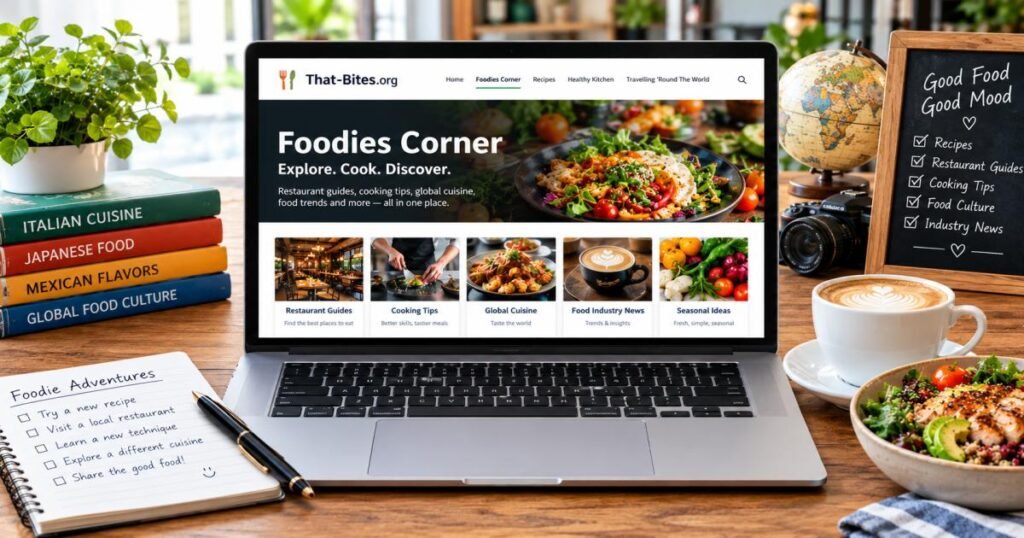
The reviewed archive spans five broad areas: dining discoveries, cooking techniques, international food subjects, business trends, and seasonal hosting. Specific articles show what each area includes.
Food Discoveries and Restaurant Guides
Place-based articles include “Winnipeg’s Hidden Food Gems: Where Locals Really Eat” and “Finest Breakfast in Huntersville, NC: A Local’s Guide.” These titles target readers looking for food within a particular city or town.
Use a dining article to build a shortlist, not to settle every detail of a visit. Before leaving home, confirm the restaurant’s address, menu, opening hours, and booking requirements through its own channels.
For example, a breakfast guide may help you choose a venue, while the restaurant’s current menu answers whether it serves the dish you want.
Cooking Techniques and Practical Kitchen Advice
The archive also lists articles about meat preparation and the effect of rice texture on maki rolls. These subjects address how food behaves during cooking or assembly.
A useful technique article should explain more than the desired result. Look for steps, measurements, signs of progress, and common mistakes.
If an article tells you to cook something “until ready,” ask whether it explains what ready means. Texture, timing, and safe internal temperature answer different questions.
International Cuisine and Food Culture
Foodies Corner includes subjects linked to several places, including Japanese-style maki, Canadian dining, French Cognac, UK catering, and restaurants in Hong Kong.
That geographic range gives readers multiple starting points. It does not make one article a complete guide to a country’s food.
Read for specifics: the dish, place, method, or business practice under discussion. Then seek local voices or specialist sources if you want deeper context.
Food Industry News and Emerging Trends
The section includes articles about Airstream catering trailers in the UK and the use of pre-made meals in Hong Kong restaurants.
These posts address different business questions. A catering-trailer article concerns a way of serving food. A pre-made-meal article concerns preparation, costs, and restaurant operations.
Keep that scope in mind. A few examples can illustrate a development, but they cannot establish how widely an entire industry has adopted it.
Seasonal Food Ideas and Entertaining Tips
“Holiday Hosting Made Easy: Festive Cooking, Frappe Bases & Foodie Gift Ideas” appears in the archive. Its title combines entertaining, drinks, and gifts rather than focusing on one recipe.
Read a hosting article with a practical checklist beside you:
- How many people will attend?
- What food restrictions must you account for?
- Which tasks can you finish ahead of time?
- What equipment and storage space will you need?
These questions help turn a broad idea into a plan that fits your event.
Popular Topics and Examples From Foodies Corner
The examples below come from the reviewed category archive. They demonstrate its subject range, not its readership rankings. The archive does not provide traffic figures that establish which posts attract the most readers.
Exploring Local Food Destinations and Hidden Gems
The Winnipeg article introduces food discovery through neighborhood bakeries, market counters, drive-in windows, and modest storefronts. Its opening encourages readers to look beyond dining options near downtown hotels.
That angle gives the article a clear purpose: finding food outside the most obvious visitor routes.
The Huntersville breakfast guide narrows the search in a different way. It focuses on one meal in one town. Together, the two examples show how a dining article can answer either a broad discovery question or a more specific planning need.
Understanding Cooking Techniques and Ingredient Choices
“How Rice Texture Impacts Maki Consistency” connects rice texture with the structure of a sushi roll, the position of its filling, and the appearance of cut pieces.
This topic offers a useful way to approach cooking problems: identify the ingredient or step that may affect the result.
Instead of asking only why a roll falls apart, a reader can examine rice texture, filling quantity, and rolling technique separately. The article’s title identifies one variable; the full text should explain how to assess it.
Exploring Restaurant and Catering Industry Trends
The catering-trailer and Hong Kong restaurant articles broaden the category beyond home cooking. They introduce questions about service formats and food preparation within commercial settings.
Readers considering a food business should separate inspiration from decision-making evidence. An article may introduce an appealing format without answering questions about permits, startup costs, food storage, or local demand.
Use the topic as a research lead. Then consult sources tied to the location and business model you are considering.
Discovering Coffee, Meat Preparation, and Other Culinary Topics
“Can You Use Any Coffee for Espresso?” addresses a specific question about coffee choice. The archive also includes “Perfectly Cooked Meat: Tips Every Home Chef Should Know” and an article about Cognac.
These subjects need different forms of support.
A coffee preference can rest partly on taste. Meat-safety instructions need established guidance. Claims about a drink’s origin or production should point to reliable records or informed sources.
The variety makes browsing interesting, but it also makes article-by-article judgment essential.
Who Should Explore THAT Bites Foodies Corner?
The section may suit readers who want several food interests in one place. Its listed topics include home cooking, restaurant visits, drinks, entertaining, and food-business issues.
Home Cooks and Beginner Food Enthusiasts
Beginners can start with a question they already have, such as how rice texture affects maki or what coffee to choose for espresso. Both subjects appear in the archive.
Choose articles that define unfamiliar terms and provide enough detail to follow.
Before trying a method, make sure you understand the ingredients, equipment, sequence, and safety requirements. If a key step remains unclear, find a more complete explanation before proceeding.
Experienced Cooks and Culinary Hobbyists
An experienced cook may read with a narrower goal: solving a recurring problem or comparing another writer’s method with their own.
The maki article offers one example. Someone who already makes rolls could examine its explanation of rice texture rather than expecting a full beginner’s lesson.
Read critically and keep notes if you test an idea. Change one part of your method at a time so you can judge whether that change helped.
Readers Interested in Restaurants and Food Culture
The Winnipeg and Huntersville guides provide location-based reading for people interested in where others eat.
When evaluating these articles, look for concrete details. Does the writer name dishes, explain the selection criteria, or describe a visit?
A list of venues helps with discovery. Specific observations make it easier to understand why those venues earned a place in the guide.
People Curious About Global Food Trends
Readers interested in food businesses may prefer the UK catering and Hong Kong restaurant topics.
Check the location and time frame of each claim. A practice in one market may not reflect conditions elsewhere.
For business planning, use current local information rather than carrying an article’s conclusions into a different country or city.
How to Navigate and Explore Foodies Corner
Start with the category archive. It gives you a direct view of the section’s published topics without relying on another website’s description of its features.
Finding Articles Through the Website’s Categories
The category uses /category/foodie/ in its address, while the page displays “Foodies Corner.” The archive includes titles and introductions that help readers choose a post.
Check the domain carefully: this guide concerns that-bites.org.
Once you reach the category, open the article that matches your question. A summary can introduce a topic, but you need the full text to judge the method, evidence, or recommendation.
Identifying Topics That Match Your Interests
Use a question to guide your browsing.
“Where could I eat breakfast in Huntersville?” points toward a local dining guide. “Why do my maki rolls lose their shape?” points toward a technique article.
Read the opening paragraph before investing time in the whole post. If it addresses a different question, move on rather than trying to make it fit your needs.
Checking Article Dates and Relevant Updates
Look for publication and update dates on individual articles.
The reviewed archive does not establish a fixed publishing schedule, so this guide does not claim that Foodies Corner adds posts daily or weekly.
For details that can change, verify the information directly. A recent date does not guarantee a restaurant’s hours are correct, just as an older date does not automatically invalidate a basic technique explanation.
Using Related Articles to Explore a Topic Further
Follow related links when they answer a remaining question.
After a general meat-preparation article, you may need guidance for a particular cut. After a dining guide, you may need the venue’s menu or booking page.
Each extra source should add something: a missing step, a current detail, a clearer explanation, or evidence for a claim.
What Makes Foodies Corner Different From Other Food Blogs?
Its visible distinction is breadth. The reviewed archive combines dining guides, kitchen questions, drinks, hosting ideas, and food-business topics. That describes the content mix; it does not establish superior quality.
The Variety of Food-Related Subjects
A reader can move from North Carolina breakfast spots to espresso, maki, Cognac, or UK catering trailers within the same category.
The archive also has a limitation worth noting. Older category pages include unrelated subjects, such as sports streaming and phone wallpapers. Readers should not assume that every entry under the category label concerns food.
Practical Information Versus General Food Inspiration
Judge an article by its purpose.
An inspiration piece may introduce a dish or venue. A practical guide needs enough detail to support an action.
For a cooking method, look for quantities, steps, timings, and relevant precautions. For a restaurant recommendation, look for selection criteria and verifiable details.
An article can work well as an introduction without meeting the requirements of a complete how-to guide.
How Its Published Content Compares With Other Food Websites
Testing policies offer a more useful comparison than broad claims about quality.
America’s Test Kitchen describes repeated recipe development and feedback from home cooks. It says a recipe must reach an 80% “make-again” score before publication.
Serious Eats publishes an account of its product-testing process, including testing plans and editorial review.
The Foodies Corner archive reviewed here does not establish an equivalent testing policy. Readers should therefore look for evidence within each article rather than assume a site-wide process.
What Readers Should Check Before Relying on an Article
Use five questions:
- Who wrote it?
- What relevant experience does the author show?
- What sources support its claims?
- Does it explain how the writer concluded?
- Does it disclose important limits or commercial relationships?
These checks help you assess the article in front of you without making unsupported judgments about the entire website.
Is THAT Bites Foodies Corner a Reliable Source of Food Information?
The reviewed archive does not support a blanket judgment about every article’s accuracy. Assess reliability at the article level, especially for claims involving safety, nutrition, or significant spending.
Checking Author Profiles and Relevant Experience
The archive shows posts under Jenny Tallis and an account-style byline, pm_author_bk88. The site’s footer describes Jenny’s cooking background and food-service experience. Those details represent the website’s own biographical claims, not independently verified credentials.
Look for experience that fits the subject.
A background in cooking may support practical kitchen observations. It does not automatically establish expertise in medical nutrition, food microbiology, or every cuisine the site covers.
Looking for Credible Sources and Verifiable Claims
Match the evidence to the statement.
A trend article should identify places, dates, examples, or data. A restaurant review should make its basis clear. A technique guide should explain the method and its limits.
Google’s guidance on helpful content also highlights clear sourcing, evidence of expertise, and trust. These principles offer readers a useful way to assess online information.
Distinguishing Personal Opinions From Factual Information
Words such as “delicious” and “my favorite” express a preference. Claims such as “allergy-safe” or “safe to store overnight” require stronger support.
Read labels such as “best,” “healthy,” and “authentic” carefully. Does the author define the term? Does the article explain the basis for it?
Clear writing separates what the author likes from what the evidence establishes.
Evaluating Food Safety, Nutrition, and Cooking Advice Carefully
For cooking safety, consult official guidance. FoodSafety.gov recommends checking safe internal temperatures with a food thermometer.
USDA’s guidance includes the following minimum temperatures:
| Food | Minimum internal temperature |
| Whole cuts of beef, pork, veal, and lamb | 145°F, about 63°C, followed by at least a three-minute rest |
| Ground beef, pork, veal, and lamb | 160°F, about 71°C |
| Poultry, including ground poultry | 165°F, about 74°C |
| Leftovers | 165°F, about 74°C |
These figures come from USDA guidance, not from Foodies Corner. Readers elsewhere should also check their national food-safety authority’s advice.
Treat a general food article as background reading, not personalized care for an allergy, medical condition, or prescribed diet.
Tips for Getting the Most Out of Foodies Corner
Use the archive selectively. Decide what you need, read the relevant article, and verify the details that matter to your next step.
Choose Articles Based on Your Specific Needs
Set a goal before browsing.
If you want dinner instructions, find an article that includes a complete method. If you want dining ideas, choose a guide tied to the place you plan to visit.
The archive’s mix of subjects makes that distinction important. An espresso explainer, a restaurant list, and a holiday-hosting feature serve different needs.
Compare Important Claims With Authoritative Sources
Focus your checking where an error could matter.
Confirm food temperatures through official guidance. Check a venue’s current details with the business. For product claims, seek reviews that explain how the writer tested the item.
You do not need independent proof for someone’s favorite flavor. You do need a sound basis for advice that affects safety or a costly purchase.
Apply Cooking Advice With Appropriate Food Safety Precautions
Do not confuse a flavor preference with a safety standard.
A writer may recommend a technique for texture, but that recommendation still needs to fit safe handling and cooking guidance.
For example, USDA pairs its 145°F minimum for whole cuts of beef, pork, veal, and lamb with a rest of at least three minutes. Leaving out the rest changes the instruction.
Explore Different Cuisines and Culinary Perspectives
Let an unfamiliar article lead you toward more specific sources.
The archive’s maki topic can prompt further reading about rice preparation. Its Winnipeg guide can lead you to local food writers. Its Hong Kong restaurant topic can lead you to reporting from that market.
This approach adds context without asking one general-interest article to answer every question.
Final Thoughts
Foodies Corner brings several kinds of food reading into one category, from Winnipeg dining discoveries to espresso questions and maki technique. Its archive confirms that range, but it does not establish a testing standard for every article.
That distinction should guide how you read it: use the section for discovery, then assess the author, evidence, and instructions before acting. The more important the decision, the more carefully you should check the source.
FAQs
What Is www that-bites.org Foodies Corner?
Foodies Corner is a category on THAT Bites that publishes articles about dining, cooking techniques, drinks, seasonal hosting, and food-business subjects. Its archive sits at that-bites.org/category/foodie/.
What Type of Content Does Foodies Corner Publish?
The reviewed archive includes local restaurant guides, meat-preparation advice, coffee and espresso topics, maki rice texture, holiday entertaining, and restaurant-industry articles. Individual posts vary in purpose and depth.
Is Foodies Corner Only About Recipes?
No. Its archive includes dining destinations, drinks, catering, and restaurant operations alongside cooking-related topics. Do not assume that every article contains ingredients and step-by-step recipe instructions.
Can Beginners Benefit From Foodies Corner?
Beginners can use its topics to identify questions worth exploring, including coffee selection and cooking techniques. Check that an individual article explains the terms, steps, and precautions you need; the archive does not establish that every post has undergone beginner testing.
How Can I Find the Latest Foodies Corner Articles?
Visit the category archive, open posts that interest you, and check their publication or update dates. The reviewed archive does not establish a fixed posting schedule.
How Can I Check Whether Information on Foodies Corner Is Accurate?
Review the author’s relevant experience, the article’s sources, and the evidence behind its claims. Confirm changing details with the original provider. For food-safety advice, compare the instructions with official guidance from USDA, FoodSafety.gov, or your national authority.