Droven.io Enterprise Tech Innovation: The Complete 2026 Guide
Every company claims to be innovating. Few can say what actually changed. This guide covers Droven.io enterprise tech innovation in plain English for U.S. readers. You will learn how artificial intelligence, cloud computing, and business automation fit together. You will also get a clear plan you can use this year.
What Is Droven.io Enterprise Tech Innovation?
Droven.io enterprise tech innovation is a topic. It covers how firms use AI and emerging technology to get better results. The tools include machine learning, generative AI, cloud computing, data analytics, and cybersecurity. The goal is measurable business value, not shiny gadgets.
Two ideas often get mixed up here. One is the brand name. The other is the wider field of enterprise technology innovation. This guide treats them separately. That way you can judge each claim on its own.
Is Droven.io a Software Product or a Content Platform?
Public descriptions present Droven.io as a technology and AI-focused content platform. That makes it an information and research resource rather than a SaaS product you install. Check the live site yourself before you decide. A Droven.io content platform teaches you. It doesn’t run your payroll.
What Is Known About Droven.io?
Little is documented beyond its coverage. Public material links Droven.io technology to enterprise technology, AI, IT services, and technology trends. It doesn’t publish clear product specs or pricing. Treat Droven.io tech innovation content as a starting point for technology research. Confirm every important claim elsewhere.
| Feature | Enterprise Software | Enterprise Tech Innovation Content |
| Purpose | Runs a business process | Explains ideas and technology trends |
| You get | A deployable tool | Knowledge and direction |
| Cost model | License or subscription | Usually free to read |
| Next step | Install and train staff | Research and plan |
Why Enterprise Tech Innovation Matters in 2026
Standing still costs money. Rivals ship faster. Customers expect instant answers. Attackers grow smarter each year. Enterprise innovation helps you keep pace. It supports operational efficiency and business modernization at the same time.
The U.S. market adds extra pressure. Labor costs stay high. Rules on privacy and AI governance keep changing. Boards want proof of returns. Because of this, every technology investment needs a clear reason.
The AI Adoption vs. ROI Gap
Many firms use AI today. Far fewer see big financial gains. That gap is the AI adoption problem. Surveys such as McKinsey’s State of AI research show firms redesigning workflow integration to close it. Tools alone don’t create ROI. Better workflows do.
Workforce and Skill-Gap Pressure
Tools move fast. People need time. The skills gap slows many digital transformation projects. Smart firms invest in employee training and upskilling early. They also plan change management so staff feel supported instead of threatened. That builds trust and speeds up technology adoption.
Who Should Use Droven.io Enterprise Tech Innovation?
Think of it as picking the right tool for the right reader. This resource suits people who want context before they buy. It gives you vocabulary and ideas. You can then ask sharper questions of vendors.
Use it as a map rather than a final buying guide. Read it, note the terms, and then dig deeper. Vendor papers and independent reviews fill in the details. That habit protects your budget.
Who Can Benefit From It?
Business owners, IT managers, startups, students, and analysts can all gain value. A founder can learn what enterprise AI tools exist. A manager can prepare for a technology audit. A student can follow future technology themes without heavy jargon.
When It May Not Be the Right Resource
Some jobs need firmer sources. You need vendor documents to compare features. You need a lawyer for compliance requirements. You need a real product for daily work. A content platform can’t do those things. Use the right source for each task.
What Are the Core Pillars of Enterprise Tech Innovation?
Strong enterprise technology innovation rests on five pillars. They are AI, data, cloud, security, and people. Each one supports the others. Together they form a healthy technology ecosystem.
One weak pillar hurts the rest. Bad data ruins good AI. Weak security ruins a fast cloud. Untrained staff waste smart tools. So build all five in balance.
AI and Intelligent Automation
Intelligent automation blends AI-driven automation with workflow automation. Machine learning spots patterns. Generative AI drafts text and summaries. AI agents can handle routine tasks. Staff then focus on work that needs judgment and human oversight.
Data and Analytics
Data is the fuel. Clean data powers data analytics, business analytics, and predictive analytics. Data platforms bring scattered facts into one place. Firms with siloed data struggle. Firms with strong data governance move faster and trust their numbers.
Hybrid Cloud and Scalable Infrastructure
Hybrid cloud mixes public cloud with private infrastructure and on-premises systems. It gives you scalable infrastructure without giving up control. It also helps with data residency rules. U.S. firms in regulated fields often prefer this mix.
Cybersecurity and Digital Trust
More systems mean more risk. Cybersecurity protects your data and your reputation. Strong identity management and access controls limit damage. Security monitoring catches problems early. The NIST Cybersecurity Framework offers a trusted guide for risk management and digital trust.
Workforce Transformation
Workforce transformation changes how people work. Some jobs shift through role redesign. New roles appear too. Upskilling keeps staff confident. Good leaders explain the why behind each change. That raises employee adoption and lowers fear.
The Role of Artificial Intelligence in Enterprise Innovation
AI innovation has moved from lab tests to daily work. Teams now use it in support desks and finance offices. The shift is real. Yet results depend on careful AI implementation.
Trust matters as much as speed. Trustworthy AI needs clear rules and checks. The NIST AI Risk Management Framework offers four functions: Govern, Map, Measure, and Manage. Use them to guide responsible technology adoption.
AI in Customer Service
Fast answers win loyal customers. Chat assistants handle common questions at any hour. Smart routing sends hard cases to people. This improves customer support and cuts customer response time. Agents get better context and can show more care.
AI in Marketing
AI business applications help marketers segment audiences and personalize offers. Generative AI drafts copy quickly. Still, people must review every claim. A wrong fact can hurt your brand. Keep human oversight in the loop.
AI in Finance
Finance teams use AI for forecasting, fraud detection, and document processing. Anomaly monitoring flags odd transactions. Every decision needs an audit trail. Money errors carry high costs. Explainable models protect both firms and customers.
AI in Operations
Operations teams predict demand and plan inventory. Predictive maintenance warns you before a machine fails. That saves repair costs and downtime. Connected data makes it work. Sales data can guide stock. Sensor data can guide repairs.
| Department | Common Use | Main Benefit | Main Risk |
| Customer service | Chat assistants | Faster replies | Wrong answers |
| Marketing | Personalization | Higher engagement | Off-brand content |
| Finance | Fraud detection | Fewer losses | False alarms |
| Operations | Predictive maintenance | Less downtime | Poor sensor data |
Traditional Automation vs. AI-Driven Automation
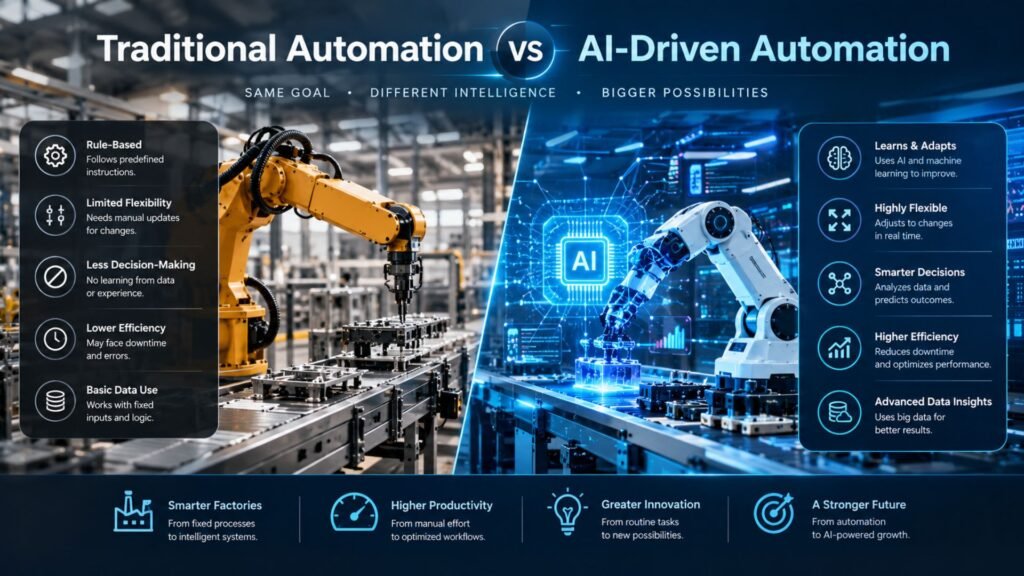
Picture a vending machine. It follows fixed if/then rules. Press B4 and you get chips. That is traditional automation. It works well for simple and steady tasks. It breaks when something unexpected happens.
Now picture a helpful shop assistant. This person reads the situation and makes adaptive decisions. AI-driven workflows work the same way. They handle unstructured data such as emails and scanned forms. They cope with odd cases that would stop a rule-based bot.
| Factor | Traditional Automation | AI-Driven Automation |
| Logic | Fixed if/then rules | Learns and adapts |
| Input type | Structured data | Structured and unstructured data |
| Setup cost | Lower | Higher |
| Best use | Repeat tasks | Messy and variable tasks |
Traditional Enterprise IT vs. Enterprise Tech Innovation
The old model moved slowly. Teams built large projects over many months. Systems sat apart from each other. Legacy systems needed heavy upkeep. Change felt risky and expensive.
The new model moves in small steps. Teams run quick pilots and learn fast. Connected data feeds better choices. Goals focus on business outcomes instead of just uptime. That shift defines modern technology modernization.
| Area | Traditional Enterprise IT | Enterprise Tech Innovation |
| Speed | Slow release cycles | Fast pilot programs |
| Data | Siloed | Connected |
| Goal | Keep systems running | Deliver measurable outcomes |
| Risk approach | Avoid change | Test and learn |
How Enterprise Software Integrates With AI Platforms
Many buyers believe AI is plug and play. It rarely is. AI integration decides whether a tool succeeds. Your enterprise systems must share data smoothly. Poor links create errors and delays.
Three methods do most of the work. They are APIs, webhooks, and middleware. Each one solves a different problem. Together they form a strong base for technology integration across your CRM, ERP, and ticketing platforms.
API Connections
Think of an API as a restaurant menu. You order from a fixed list. The kitchen sends back your dish. In the same way, API integration lets one system request data or actions from another. It is the most common link between enterprise software and AI services.
Webhooks and Event Triggers
A webhook works like a doorbell. When something happens the system rings. A new order arrives and an event trigger starts a task. This supports event-driven systems. It saves time because nobody has to check manually.
Middleware and Orchestration Layers
Middleware sits between your tools. Orchestration layers coordinate steps across many systems. They keep workflow orchestration reliable when a step fails. They also help with legacy integration. Without them, tangled links can grow hard to manage.
Cloud Computing and Enterprise Technology
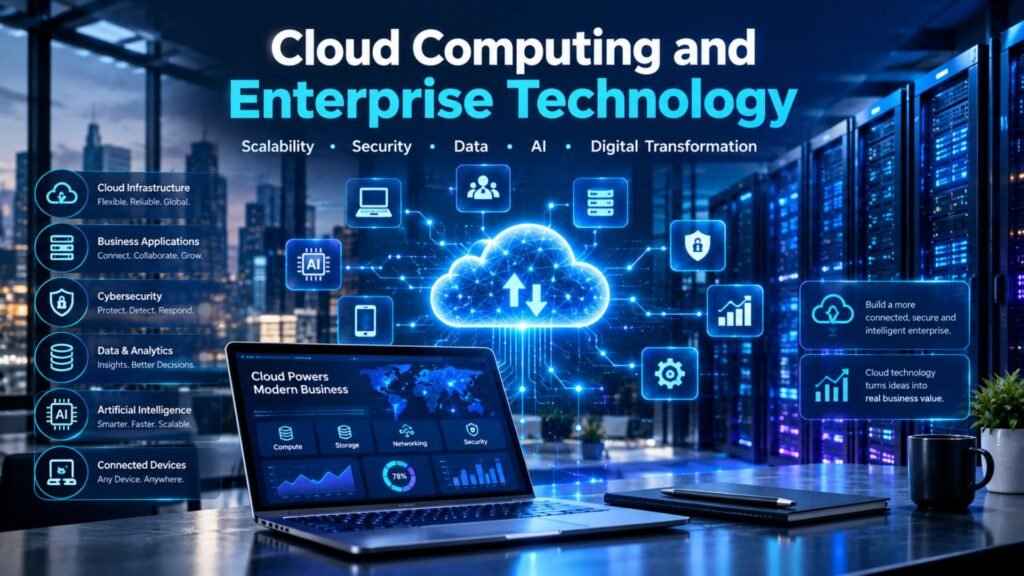
Cloud computing gives you power on demand. You scale up during busy weeks and scale down later. It also forms the base for AI and analytics. Cloud infrastructure helps teams launch new tools faster.
Yet cloud migration needs care. Costs can climb without tight control. Vendor dependency can trap you later. Plan for resilience and clear exit options. A thoughtful hybrid infrastructure often balances these risks.
Data Analytics and Intelligent Decision-Making
Good decisions start with good data. Descriptive analytics explains what happened. Predictive analytics estimates what may come next. Prescriptive analytics suggests actions. Together they support data-driven decision-making and decision support.
Remember the old saying: garbage in, garbage out. Poor data quality leads to bad conclusions. Duplicates and stale records cause harm. Clean your data first. Then let AI find patterns you would have missed.
Read More About: About RobTheCoins Explained: The Site, the People and the Claims Around It
Cybersecurity in the Age of Digital Transformation
Digital transformation widens your attack surface. More apps, devices, and APIs mean more entry points. AI systems add new risks too. Cybersecurity risk grows unless you plan for it from day one.
Build security controls into every project. Use identity and access management to limit who sees what. Watch your systems around the clock. Follow the NIST guidance for digital resilience. Prevention costs far less than recovery.
Software Development and Enterprise Innovation
Modern software development uses cloud-native design and APIs. Teams rely on DevOps habits and automated testing. These methods speed up releases. They also make fixes easier. Good software architecture keeps everything flexible.
AI coding tools now help developers write code. They save time on routine work. Yet humans must review every output. Secure coding, testing, and monitoring still matter. Speed never replaces discipline.
Robotics and Physical Automation
Robotics brings innovation into the real world. Warehouses use robots to move goods. Factories use them for precise tasks. Hospitals use them for delivery and support. They handle work that is repetitive or risky.
Modern robots see and react. Computer vision and sensors let them adapt to change. They no longer repeat one fixed motion. Workers then shift toward supervision and repair. That is workforce transformation in action.
How Different Technologies Work Together
Think of an orchestra. Cloud sets the stage. Data supplies the music. AI reads the score. Automation plays the parts. Security keeps the whole hall safe. Each piece matters. The technology ecosystem works best in harmony.
Consider a retailer. Cloud systems store sales data. Analytics find buying patterns. AI forecasts demand. Automated workflows reorder stock. Security tools protect customer records. The result is a faster and smarter business.
Real-World Examples of Enterprise Tech Innovation
Theory is nice. Results are better. Read every case study with care. Ask what was measured and over what period. The examples below are illustrative. They show common patterns rather than named company results.
Always verify any named case before you repeat it. Look for linked sources and clear numbers. Be wary of vague claims. Strong evidence names the baseline and the change.
Retail
An illustrative mid-size retailer adds AI forecasting to its inventory planning. Stock levels match demand more closely. Shelves stay full and waste drops. Personalization also lifts sales. This shows retail technology improving customer experience and revenue lift.
Healthcare
A clinic automates scheduling and note drafting. Staff spend less time on paperwork. Privacy rules such as HIPAA shape every step. Human review stays in place for clinical choices. Healthcare technology works best when safety leads the plan.
Manufacturing
A plant fits sensors to key machines. Predictive maintenance flags wear before a breakdown. Computer vision checks parts for defects. Downtime falls and quality rises. Manufacturing technology links machines, people, and data for faster choices.
Finance
A bank scans transactions in real time. Anomaly monitoring flags suspicious patterns. Analysts review the alerts. This supports fraud prevention and compliance. Financial technology must balance speed with strict testing and clear records.
Human Resources
A company automates resume screening and onboarding tasks. Recruiters gain time for real conversations. Bias checks are essential. Humans make the final hiring call. Human resources technology should support fairness instead of hiding unfairness.
How to Evaluate Enterprise AI Tools
Beware the shiny demo. A slick presentation can hide real gaps. Good vendor evaluation looks past the show. It tests fit, cost, and risk. Use the five steps below.
Each step guards against a common failure. Together they support solid technology due diligence. They also help you compare enterprise AI tools fairly. Take your time. A careful choice saves months of pain.
Start With the Business Problem
Name the problem before you meet vendors. Is it slow approvals or rising costs? Write it down in one sentence. A clear problem keeps your technology strategy focused. It also stops vendors from steering you toward features you don’t need.
Audit Your Data Readiness
Check data readiness early. Ask where the data lives and who owns it. Test its quality and access rules. Weak data integration stalls most projects. Fixing data first is dull work. Yet it pays off later.
Understand AI Failure Modes
AI failure modes include made-up answers, bias, model drift, and data leaks. Ask vendors how they handle each one. Plan for AI monitoring and AI evaluation after launch. Knowing the risks lets you set fair limits.
Run a Focused Pilot
Start small. Pick one team and one clear owner. Record a baseline before you begin. Compare results after a set period. A pilot gives you real evidence from your own data and workflows.
Budget for Ongoing Maintenance
Licenses are only part of the bill. Training, support, integration, and model updates add cost. Track total cost of ownership. AI systems need constant care. Budget for that upkeep from the start.
| Criteria | Question to Ask | Score (1-5) |
| Fit | Does it solve our problem? | |
| Data | Can it use our data safely? | |
| Security | Does it meet our controls? | |
| Cost | What is the full cost of ownership? | |
| Support | Who helps when it fails? |
How to Measure Enterprise Tech Innovation Success
Measure what matters. Track process cycle time, cost per workflow, error rates, and customer response time. Add employee productivity and revenue lift. These operational metrics and financial metrics show whether your work paid off.
Add risk metrics and adoption numbers too. Track incident reduction and how many staff use the tool. Review results on a fixed schedule. Monthly checks work well for pilots. Quarterly checks suit larger programs.
| Metric | How to Measure | Sample Target |
| Process cycle time | Hours per task | Cut by 20% |
| Cost per workflow | Total cost divided by volume | Cut by 15% |
| Incident reduction | Security events per quarter | Cut by 25% |
| Customer response time | Average reply time | Under 2 minutes |
| Adoption rate | Active users divided by total | Above 70% |
Step-by-Step Enterprise Technology Strategy
A good plan is a loop. You test, learn, and repeat. The seven steps below form a solid technology strategy framework. Each step builds on the last. Skip none of them.
Firms of any size can use this method. Small teams can move quickly with fewer tools. Large firms may split each step across departments. The logic stays the same. Start small and prove value first.
Audit Your Current Technology
Run a technology audit. List your systems, contracts, and known gaps. Note which legacy systems slow you down. This snapshot shows where enterprise technology solutions can help. It also reveals waste you can cut right away.
Select a Specific Use Case
Pick one painful and measurable problem. Good choices include slow invoice handling or long support queues. A narrow scope lowers risk. It also produces clear proof for later technology implementation phases.
Define ROI and Success Metrics
Set the baseline first. Then set a target. Decide how you will measure ROI. Use simple success metrics that leaders can read at a glance. Without numbers you can’t tell if the effort worked.
Assess Data and Cloud Readiness
Check your data pipelines and storage. Confirm your cloud infrastructure can handle the load. Review security controls and compliance requirements. Gaps found now cost little. Gaps found later cost a lot.
Establish Governance
Assign clear owners. Adopt the four NIST functions: Govern, Map, Measure, and Manage. Write simple rules for data use and human oversight. Strong technology governance builds trust with staff and customers alike.
Prepare and Train Your Teams
People decide whether tools succeed. Offer hands-on employee training. Explain the purpose openly. Gather feedback often. Good change management turns doubters into supporters and improves workforce readiness.
Scale Proven Use Cases
Expand in stages. Add users and data slowly. Keep watching cost, security, and results. A pilot win doesn’t guarantee success everywhere. Steady growth keeps quality high and surprises low.
Common Enterprise Technology Mistakes to Avoid
Many firms copy competitors without a plan. Others skip problem definition and buy tools first. Some ignore data quality or treat AI as a side project. These habits waste money and erode trust.
Other mistakes hide in the people side. Weak governance leaves gaps. Missing training frustrates staff. Scaling too early spreads small flaws into big ones. Fix these issues before you grow.
| Mistake | Better Approach |
| Chasing trends | Start with a real problem |
| Ignoring data quality | Clean data before you buy |
| No governance | Set owners and rules early |
| Skipping training | Invest in upskilling |
| Scaling too fast | Expand in stages |
How to Use Droven.io for Enterprise Technology Research
Treat the site as a starting point. Read its enterprise technology topics to learn key terms. Then cross-check each claim. Good technology research always uses more than one source.
Better next sources include vendor documents, NIST guidance, analyst reports, and peer reviews. Compare them side by side. Note where they agree and differ. This habit sharpens your enterprise technology trends view and protects your budget.
The Future of Enterprise Tech Innovation
Expect deeper links between AI, cloud, automation, and analytics. AI agents will take on more routine steps. Connected devices will feed richer data. Firms will build whole ecosystems around their processes. That is where digital innovation is heading.
Yet tools alone won’t decide the winners. People, governance, and data quality will. Firms that train staff and manage risk will pull ahead. The smartest U.S. businesses won’t just move fast. They will move wisely.
Read More About: Terrence Duckett Bio, Age, Jasmine Guy’s Ex-Husband, Career, Net Worth & Personal Life
Frequently Asked Questions
Readers ask similar questions again and again. Here are clear answers in plain words. Each one keeps the main idea simple.
For deeper detail, turn to official guides. NIST and vendor documentation are strong places to start. Use them to confirm anything that affects a big decision.
What is Droven.io enterprise tech innovation?
Droven.io enterprise tech innovation is a technology topic. It covers AI, cloud, automation, analytics, and security in business settings. Public material presents it as part of a technology-focused content platform. It focuses on practical use rather than hype.
Is Droven.io an enterprise software platform?
Public information doesn’t show Droven.io as a deployable enterprise software product. It looks like a technology and AI-focused information and research resource. Verify this on the live site before you rely on it. Then use it for learning rather than daily operations.
What technologies are associated with enterprise tech innovation?
Common ones include artificial intelligence, generative AI, machine learning, cloud computing, data analytics, and robotic process automation. Add cybersecurity, APIs, robotics, and connected devices. Each one plays a role in a healthy technology ecosystem.
How does AI support enterprise innovation?
AI helps with support, marketing, finance, operations, forecasting, and document processing. It also speeds up software work. Good results need clean data and human oversight. Clear goals and steady AI monitoring keep projects on track.
Why is cybersecurity important in digital transformation?
More cloud services, devices, and APIs create more risk. Cybersecurity protects data and keeps operations running. It also builds digital trust with customers. The NIST CSF 2.0 gives a clear structure for managing that risk.
Final Thoughts
Droven.io enterprise tech innovation points to a simple truth. Technology works when it solves a real problem. Pick one use case. Measure the results. Then grow with care. AI, cloud, and automation reward firms that plan well.
Here is your next step. Choose one slow process in your business this week. Write down how long it takes today. That number is your baseline. From there, you can build a smart enterprise technology plan that lasts.

Ryan Cooper is a dedicated writer with a passion for creating informative and engaging content. He enjoys sharing valuable insights and helping readers stay updated with the latest trends and practical knowledge.