Boujee vs Bougie: What’s the Difference and Which Word Should You Use?
You snap a photo of a fancy brunch. The caption needs one word. Do you type bougie or boujee? That tiny choice trips up plenty of people in modern American English. Both spellings fill feeds, group chats, playlists, and lifestyle blogs. Yet few people know which one fits where.
This guide clears up the boujee vs bougie puzzle in simple terms. You’ll get the bougie meaning, the boujee meaning, the French origin, and the correct spelling. You’ll also see example sentences, a few handy tables, and clear rules for tone and audience. Ready? Let’s dig in.
Quick Answer
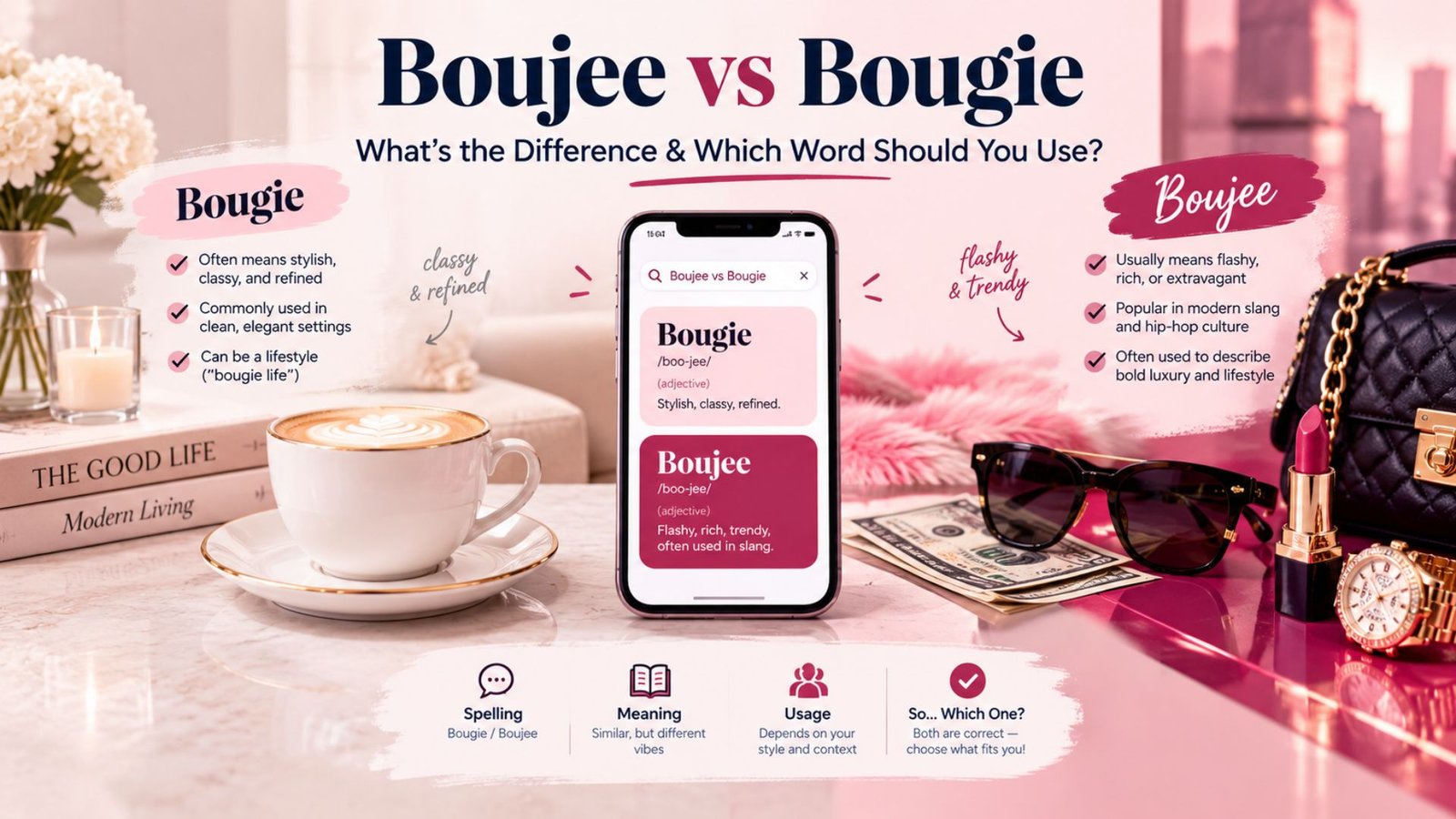
Bougie and boujee both describe something fancy, upscale, luxurious, or status-conscious. Bougie is the traditional spelling that dictionaries list. Boujee is a variant spelling that hip-hop culture pushed into the spotlight. Both are informal slang.
Here is the short rule. Pick bougie for formal writing and edited work. Pick boujee for social media captions, texting, and casual conversations. The bougie vs boujee difference lives mostly in tone and style. The definition barely changes.
Read More About: Tech Guru WaveTechGlobal: What It Is, What It Offers, and What You Should Know
What Does “Bougie” Mean?
The bougie meaning is simple. It describes a person, place, or thing tied to upscale taste, expensive taste, or a status-conscious mindset. The bougie definition in Merriam-Webster points to its roots in bourgeois. Picture a $9 fancy coffee at a trendy coffee shop. That cup is bougie. So is a premium skincare routine with six steps.
Bougie covers taste and habits. It doesn’t measure wealth. A bougie person might live in a small rental and still love designer shoes. Another person might earn a lot and wear plain sneakers. The word fits the first person better. That’s why the bougie lifestyle is about behavior and aspiration more than a bank balance.
What Does “Boujee” Mean?
The boujee meaning matches bougie in spirit. It points to something stylish, luxurious, trendy, and a little extra. The boujee definition feels lighter, though. People often use it with a grin. A boujee brunch, a designer bag, or a night out at a fancy restaurant all qualify.
The spelling took off thanks to Migos and their song “Bad and Boujee” featuring Lil Uzi Vert. The track dropped in late 2016. It hit No. 1 on the Billboard Hot 100 in January 2017. Fans started using boujee as a playful badge of success. That’s why the boujee lifestyle often sounds aspirational and fun.
The Origin of Bougie and Boujee
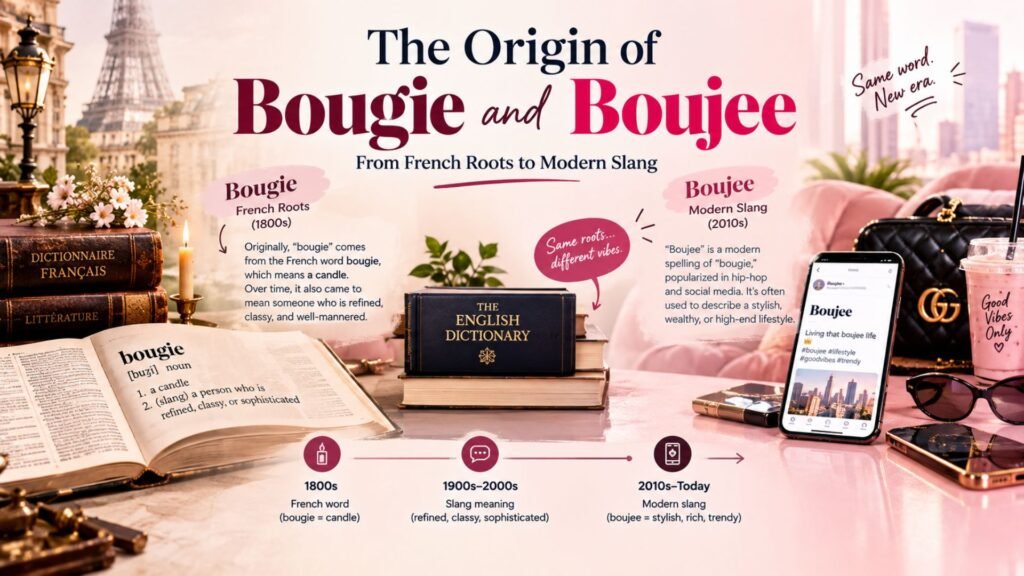
Both words trace back to the French origin bourgeois. In French, the term first meant a town-dweller. Later it described the middle class, people with property and trade. You can read the full history in the Dictionary.com entry for bourgeois. The bourgeois meaning slowly picked up a sneer. It came to suggest middle-class pretensions and a love of expensive possessions.
American English shortened the word to bougie. The slang grew strongly in African American English. Speakers used it to tease social climbing and fake polish. Later, hip-hop culture and pop culture spread the boujee version nationwide. The table below shows the path.
| Stage | Word form | Typical meaning |
| French roots | Bourgeois | Town resident, then middle class |
| Early English use | Bourgeois | Conventional, property-minded |
| American slang | Bougie | Pretentious or status-conscious |
| Hip-hop era | Boujee | Luxurious, confident, trendy |
| Today | Both | Fancy, playful, or critical |
Boujee vs Bougie: The Main Difference
The boujee vs bougie question has an easy answer. The two words share one idea. Both point to upscale taste and social status. The real split sits in the spelling and the vibe. Bougie feels older and more established. Boujee feels newer, bolder, and tied to music slang.
That said, the line is blurry. Speakers swap the two all the time. Context, tone, and audience matter more than two letters. Think of it like “grey” and “gray.” Same color, different flavor. You’ll rarely confuse your reader either way.
Is “Bougie” the Correct Spelling?
Yes. Bougie is the correct spelling for the slang adjective tied to bourgeois. Major dictionaries list it. That makes bougie spelling the safest pick for article writing, essay writing, and other professional writing. It’s the standard spelling most editors expect.
One twist exists. Bougie also names a thin medical tool used to widen a body passage. It can even mean a wax candle, a sense that links to the Algerian port city of Béjaïa. Those meanings are unrelated. In everyday talk, readers will assume the slang sense. Say it out loud: BOO-zhee.
Is “Boujee” a Real Word?
Yes. Boujee is a real variant spelling. It isn’t a typo. Millions of people type it daily. Boujee spelling thrives in songs, memes, and social media slang. Many younger readers meet this version first.
Still, treat it as a style choice. Use boujee when you want a casual tone or a pop culture wink. Skip it in a school report or a legal memo. Writers sometimes spot other forms like boujie and boojie. Those show up in informal writing, yet they’re less common.
Positive and Negative Meanings
Can one word flatter and sting at once? Bougie can. In its positive meaning, it signals classy, stylish, luxe fun. Think “bougie brunch” or “boujee weekend.” In a playful meaning, friends tease each other with it. The word becomes a hug, not a jab.
The negative meaning leans on pretentiousness, snobbery, and materialism. Say someone “got too bougie after the promotion.” You’re calling them snobby or snooty. Tone gives it away. Words like cute, treat, and luxury nearby signal praise. Words like stuck-up or too good for us signal criticism.
| Cue words nearby | Likely tone |
| treat, cute, fancy, cozy | Positive or playful |
| pretentious, snobby, fake | Negative or critical |
| girl, weekend, brunch, spa | Playful and friendly |
| changed, acts like, too | Mildly critical |
Bugie Meaning: Why Do People Search It?
Bugie meaning searches pop up because of spelling mistakes. People hear the word and guess “bugie.” English grammar rules and spelling confusion make that easy. French-linked words rarely look like they sound. So the guess feels fair.
Here’s the catch. Bugie isn’t the slang word. In Italian, bugie means “lies.” If you mean fancy or upscale, write bougie or boujee. You might also see boujie and boojie online. Treat those as informal word confusion, not standard picks.
Why Are Bougie and Boujee So Popular?
These words pack a lot into a few letters. They cover luxury, taste, and social status at once. They also sound funny. That mix suits internet slang and modern slang perfectly.
Slang also evolves. Words once used to mock can turn proud over time. Bougie followed that path. Now people use it to celebrate treat-yourself culture. Three forces drive the trend.
Social Media
On Instagram and TikTok, luxury lifestyle content rules. Feeds overflow with boutique hotels, fancy restaurants, and home decor tours. A short label like “feeling bougie” fits every caption. It admits the splurge and makes it fun. That self-aware luxury explains why both spellings thrive in social media captions.
Luxury Lifestyle Culture
You don’t need millions to join the luxury culture. One person buys designer shoes and cooks at home. Another saves for first-class travel once a year. Someone else loves luxury hotels but drives an old car. Each one shows expensive taste without wealth. The word fits them all better than “rich” ever could.
Music and Entertainment
Music gave boujee its big break. The 2016 release of “Bad and Boujee” by Migos turned the spelling into a national catchphrase. TV, memes, and radio kept it alive. As a result, hip-hop culture shifted the mood. The word moved from teasing toward celebrating nice things.
Examples of Bougie vs Boujee in Sentences
Real sentences teach faster than definitions. Short example sentences show how context and tone steer the meaning. Try swapping in “fancy” or “pretentious.” If the line still works, you’ve read the tone right.
Notice how adjectives behave here. Both words work as adjectives and as noun modifiers, as in “a bougie vibe.” Let’s look at each spelling.
Bougie Examples
Try these: “That coffee shop is pretty bougie.” “I booked a bougie hotel for our anniversary.” “My sister has bougie taste in home decor.” A critical one sounds like this: “He’s getting too bougie for our old block.” Same word, new feeling. A bougie atmosphere can charm you or annoy you.
Boujee Examples
Try these: “We’re going boujee tonight.” “Her vacation pics look so boujee.” “I bought a boujee candle to feel fancy.” One more shows a person: “She’s boujee but still down to earth.” These lines feel upbeat. They fit a casual tone and casual digital communication.
Common Mistakes and Misconceptions
Plenty of common mistakes surround these words. Some folks treat boujee as wrong. Others think bougie always means rich. A few believe it’s always rude. None of that holds up. The table below clears the fog.
| Myth | Reality |
| Boujee is incorrect | It is a recognized variant spelling |
| Bougie means rich | It describes taste, not wealth |
| Bougie is always an insult | It can be playful or kind |
| Bugie is the right spelling | It is a spelling mistake here |
The best fix is simple. Read the context first. Then pick the spelling that suits your audience. A rich person may dress plainly. A budget shopper may love premium products. Perceived wealth versus actual wealth rarely match.
When Should You Use Bougie?
Use bougie when you want the traditional spelling. It suits explainers, lifestyle descriptions, school work, and general everyday American English. It also keeps the full range, from playful to critical. Editors tend to accept it without a fuss.
For example, “The restaurant has a bougie atmosphere” reads smoothly. So does “I feel a bit bougie ordering sparkling water.” When in doubt, choose bougie. It’s familiar, neutral, and widely recognized. That makes it the dependable default.
When Should You Use Boujee?
Use boujee when you want a trendy voice. It shines in memes, texting, social media captions, and entertainment writing. It also fits any mention of “Bad and Boujee.” The spelling adds a playful tone and a hint of hip-hop influence.
For example, “We’re having a boujee weekend” sounds light and happy. Still, don’t force it. If readers expect standard English, stay with bougie. Trendy for its own sake can backfire. Match the word to the room.
Can You Use Bougie or Boujee in Professional Writing?
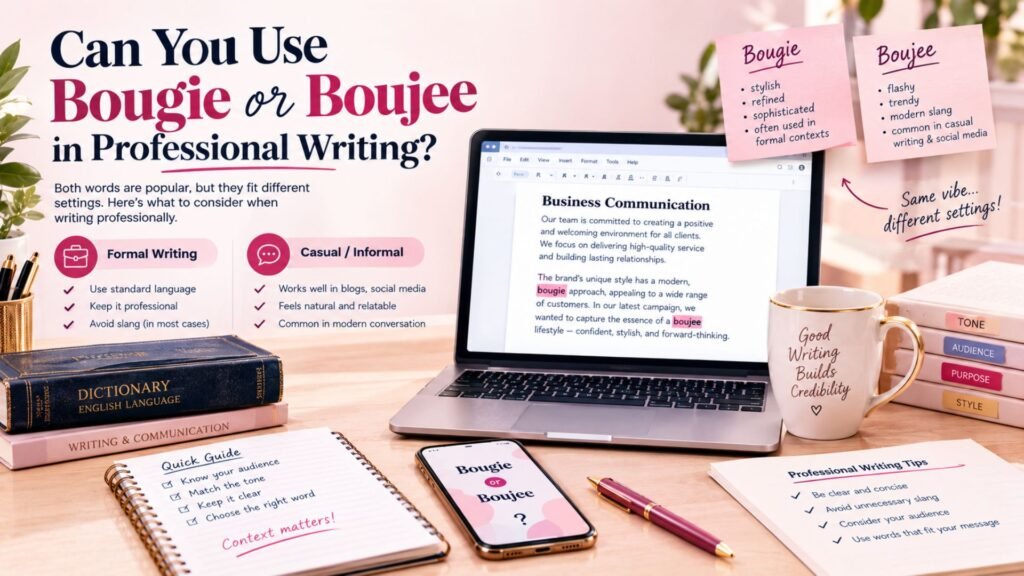
Sometimes. A lifestyle blog, a travel newsletter, or a brand with a casual voice can use bougie safely. Boujee may suit youth-focused marketing. Skip both in formal context documents like reports, contracts, or research papers. There, choose upscale, luxurious, or status-conscious instead.
Here’s a quick case study to show the point. Imagine an editor at a travel site. A writer submits a headline: “10 Boujee Hotels for Your Next Trip.” The editor swaps it to “10 Bougie Hotels.” Why? The site follows dictionary spelling. The change keeps the playful feel and passes the style guide. Small tweak. Big consistency win.
Read More About: FeedBuzzard Advertise: What It Really Means and How Advertising Works
Bougie and Boujee: Related Words and Synonyms
Plenty of synonyms and related words orbit these terms. Posh, swanky, ritzy, classy, and luxe lean positive. Fancy works almost anywhere. Snobby, snooty, and pretentious lean negative. Bourgeois is the formal cousin with class-based baggage.
Pick your word by the feeling you want. Do you want to praise polish? Choose classy or luxe. Do you want to poke fun? Try snooty. Do you want a middle path? Fancy wins. The table shows the spread.
| Word | Feel | Best for |
| Posh | Positive, a bit British | Elegant places |
| Swanky | Positive, lively | Nightlife, hotels |
| Classy | Positive, refined | People and style |
| Fancy | Neutral | Almost anything |
| Pretentious | Negative | Fake sophistication |
| Bourgeois | Formal, analytical | Class discussion |
Quick Comparison
Here’s the whole story in one glance. Bougie is the established spelling. Boujee is the modern variant. Both mean upscale and fancy. Tone and audience decide the winner.
| Word | Typical use | Common tone |
| Bougie | Edited writing, lifestyle descriptions | Neutral, playful, or critical |
| Boujee | Social media, music, pop culture | Playful and often positive |
| Bourgeois | Formal, historical, political | Analytical |
| Fancy | Everyday talk | Neutral or positive |
| Pretentious | Criticism | Negative |
FAQs
Are boujee and bougie the same thing?
Yes, they mean the same thing. Both spellings trace back to “bourgeois,” though “boujee” took off after Migos’ 2016 hit and “bougie” remains the more common dictionary spelling.
What does boujee mean in Gen Z?
Gen Z uses it for anything fancy, high-end, or a little extra, like a $9 oat milk latte. Most of the time it’s a playful label rather than a serious one.
Is boujee an insult?
It depends on the tone. Said with a smirk about someone snobby, it stings, but between friends it usually lands as a joke or even a compliment.
What is a boujee female?
She’s a woman who loves the finer things, from designer bags to brunch spots with good lighting. She knows her taste and isn’t shy about it.
What is the difference between boujee vs bougie?
Bougie is the established spelling. Boujee is a variant spelling made popular by hip-hop culture and social media. Both describe something fancy, luxurious, or status-conscious. The main gap is tone. Bougie feels neutral. Boujee feels playful.
Is boujee a real word?
Yes. Boujee is a recognized variant spelling of bougie. You’ll see it often in informal usage, songs, and casual conversation. It’s a style choice, not an error. Just avoid it in strict formal writing.
Is bougie positive or negative?
It can be either. Bougie may praise stylish, classy taste. It can also mock pretentiousness or snobbery. Always check the context and the speaker’s tone. That tells you which way it leans.
Which spelling should I use?
Use bougie as your default, especially for article writing and professional writing. Use boujee for social media captions, texting, and memes. Match the spelling to your audience. That keeps you safe.
Are bougie and bourgeois the same?
No. They’re related. Bourgeois is a formal French-derived word linked to the middle class and social status. Bougie is its informal slang offshoot. Bougie also carries a lighter, more playful flavor.
Is boujee only used in hip-hop?
No. Hip-hop popularized the spelling. Today it spreads across Instagram, TikTok, lifestyle content, and everyday texting. Anyone can use it. The word now belongs to modern American slang.
Can I use bougie or boujee to describe myself?
Yes. Self-description usually sounds playful and self-aware. “I’m bougie about my coffee” is a classic. Be careful when describing others, though. The negative meaning can sting.
Conclusion
The boujee vs bougie debate is easier than it looks. Both words describe fancy, upscale, status-conscious taste. Bougie is the traditional spelling and the best default. Boujee is the trendy, pop culture-friendly twin.
Neither word means “rich.” Neither word is always rude. Context, tone, and audience decide everything. So choose bougie for polished pages and boujee for fun posts. Use either one with confidence. Share this guide with a friend who loves a good bougie brunch. They’ll thank you.

Ryan Cooper is a dedicated writer with a passion for creating informative and engaging content. He enjoys sharing valuable insights and helping readers stay updated with the latest trends and practical knowledge.