
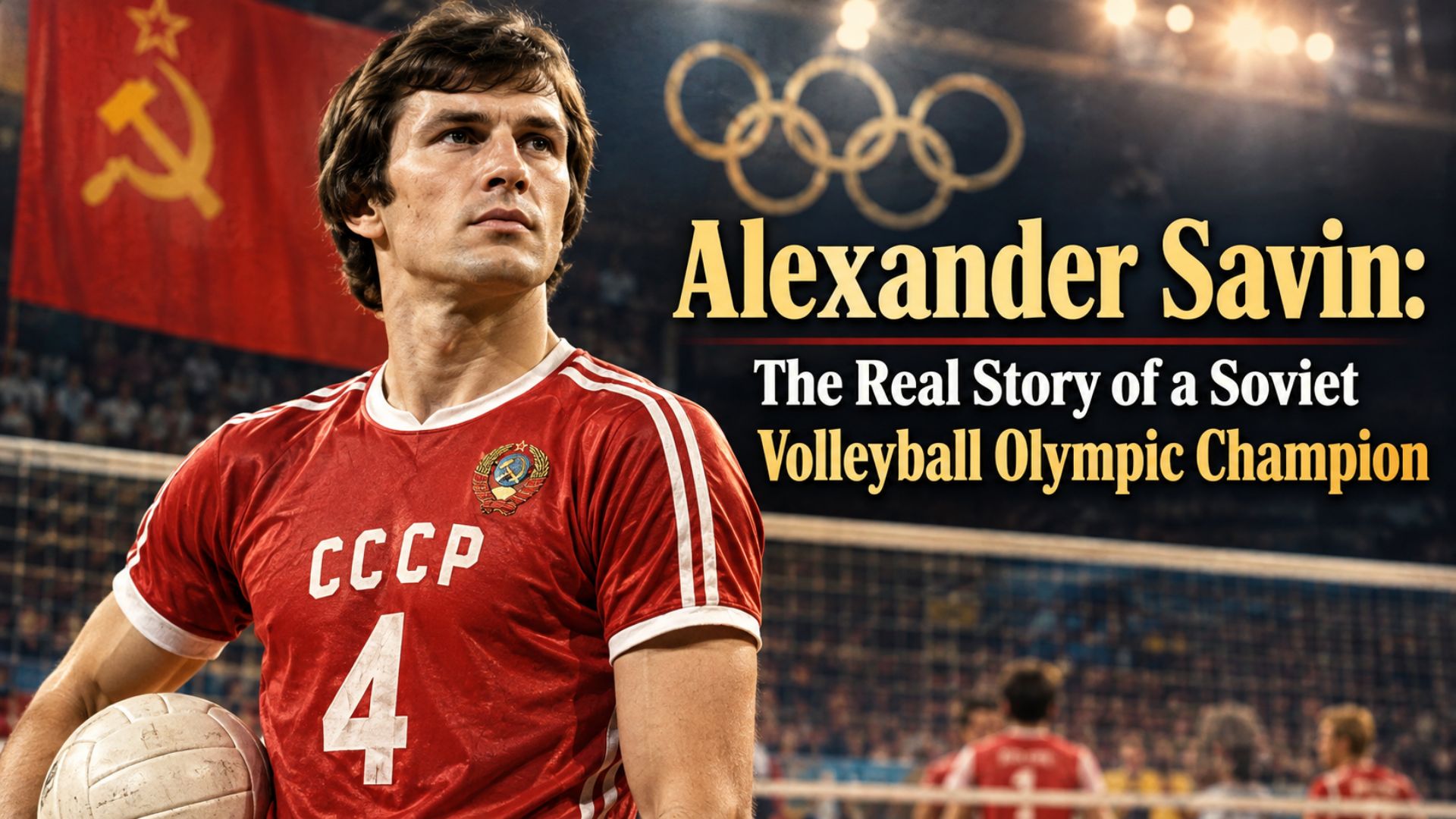
Alexander Savin: The Real Story of a Soviet Volleyball Olympic Champion
Sports fans love a good comeback story, and few careers capture that arc better than Alexander Savin’s. He’s a name that still lights up conversations among volleyball historians and Olympic enthusiasts alike. This article walks through his real journey: from a kid in a small Russian town to one of the most feared middle blockers the sport has ever seen. No embellishment needed. His actual record does the talking.
Quick Facts About Alexander Savin
Before we dig into the story, here’s the snapshot. It’s easier to follow his career when you can see the shape of it at a glance.
| Detail | Information |
| Full name | Aleksandr Borisovich Savin |
| Born | July 1, 1957, Taganrog, Soviet Union |
| Height | 200 cm (6 ft 7 in) |
| Position | Middle blocker |
| National team | Soviet Union, 1975–1986 |
| Olympic medals | Gold (1980 Moscow), Silver (1976 Montreal) |
| Club | CSKA Moscow |
| Hall of Fame | Inducted 2010, International Volleyball Hall of Fame |
Those numbers only tell part of it, though. The real story starts long before any medal ceremony.
Who Is Alexander Savin?
Ask anyone who followed Soviet volleyball in the 1970s and ’80s, and Savin’s name comes up fast. He wasn’t just a good player. He was the engine of a team that dominated international volleyball for nearly a decade. Standing six-foot-seven, with a vertical leap that terrified opposing hitters, he became the face of one of the greatest volleyball dynasties in Olympic history.
But here’s the thing people forget: he didn’t start out that way. Savin grew up far from the bright lights of Moscow’s arenas, and his path to the top wasn’t handed to him. It was built, one practice at a time.
Read More About: Why Does Ozdikenosis Kill You? The Truth Behind the Viral Disease Search in 2026
Alexander Savin’s Early Life and Path to Elite Volleyball
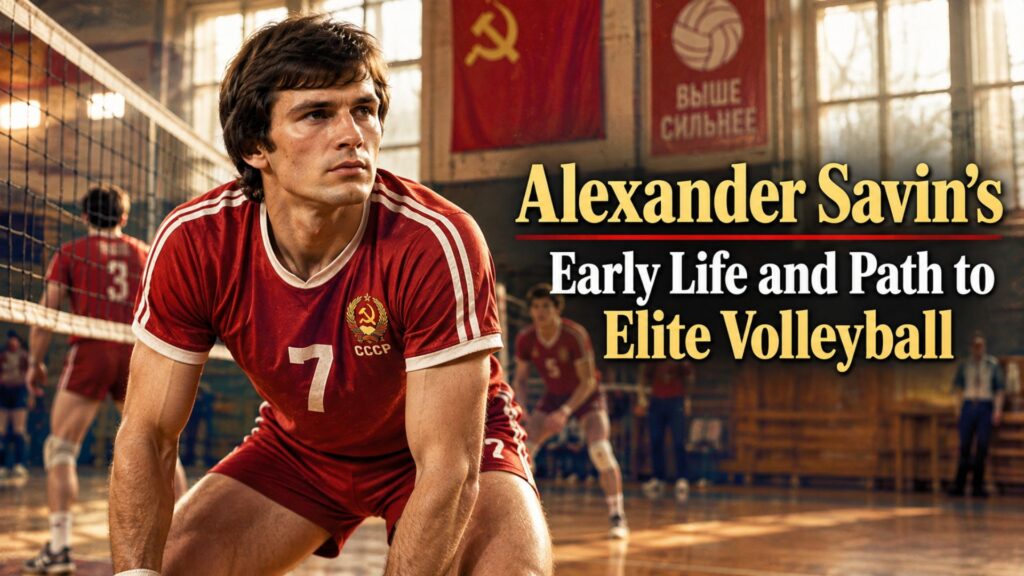
Every athlete biography worth reading has a beginning that doesn’t look like the ending. Savin’s is no different.
Growing Up in Taganrog and Obninsk
Savin was born in Taganrog, a port city on the Sea of Azov, in 1957. As a young boy, his family moved to Obninsk, a city in the Kaluga region known more for its nuclear research than its sports scene. That’s an odd place for a future Olympic champion to sprout up, but it’s exactly what happened.
He started playing volleyball as a student, joining a local club called Obninsk Youth in 1967, when he was still just ten years old. His first coach, Vladimir Pitanov, saw something in the tall, gangly kid that others might’ve missed. That early mentorship mattered. Coaching influence shapes careers far more than most people realize, and Savin’s is a textbook case. Decades later, the sports school where he trained was renamed in his honor. Not bad for a kid from a nuclear-research town.
Entering Elite Volleyball
Talent gets you noticed. Discipline gets you selected. Savin had both, and by his late teens, he’d caught the eye of Soviet volleyball’s talent pipeline. This wasn’t a casual, sign-up-and-see system. The Soviet sports system ran on centralized training, rigorous competitive selection, and a pathway that funneled promising athletes into elite programs.
Savin joined CSKA Moscow, the army sports club that fed the national team for decades. Playing for CSKA wasn’t just prestigious. It was, functionally, a prerequisite for reaching the top of Soviet volleyball. The advanced training programs there pushed him past what raw talent alone could’ve achieved. By 1975, at just 18, he’d already won a European Junior Championship gold medal. The kid from Obninsk was becoming something else entirely.
Alexander Savin’s Olympic Journey
This is where the story gets its teeth. Two Olympics, two outcomes, and a lesson in how elite athletes respond to disappointment.
The 1976 Montreal Olympics
Savin made his Olympic debut in Montreal at just 19 years old. The Soviet squad walked in as favorites, fresh off winning the 1975 European Championship and a silver medal at the 1974 World Championship. And for a while, they looked unbeatable. They swept through pool play, beating Italy, Bulgaria, and Japan without dropping a single set. They then won a tense three-set semifinal against Cuba to reach the gold-medal match.
Then Poland happened. In a tight, five-set battle, Poland pulled off the upset, and the Soviets settled for silver. Savin played every single match at those Games. That kind of heartbreak either breaks an athlete or forges them. For Savin and his teammates, it clearly did the latter.
The 1980 Moscow Olympics
Four years is a long time to sit with a loss. The Soviet team used every bit of it. Hosting the Games in Moscow added an extra layer of pressure. Winning at home, in front of your own crowd, carries a weight that away victories never quite match.
Savin and his teammates didn’t just prepare. They rebuilt. Along the way, they added European titles in 1977 and 1979, a World Cup gold in 1977, and a World Championship gold in 1978. By the time Moscow rolled around, this wasn’t a team hoping for gold. It was a team that expected it.
The tournament played out almost like a script written for redemption. The Soviets opened with a win over Czechoslovakia, then shut out Italy, Bulgaria, and Cuba in pool play without losing a set. They swept past Romania in the semifinal, then beat Bulgaria in the final to finally claim Olympic gold. Savin played all six matches. The silver from Montreal had become gold in Moscow, and the story came full circle.
Alexander Savin’s Volleyball Career and the Soviet Golden Era
Savin’s Olympic story is the headline, but his full volleyball career stretched far wider than two Olympic tournaments.
Soviet Volleyball During Its Golden Era
The Soviet Union built one of the most effective athlete-development machines the sporting world has ever seen. Soviet-era athletics relied on structured athlete development, from childhood identification all the way through Olympic preparation. It wasn’t glamorous. It was systematic. And it worked.
Savin’s national team career ran from 1975 to 1986, a stretch during which the Soviets barely lost. Consider the trophy case: two World Championship golds (1978, 1982) plus a silver (1986), two FIVB World Cup golds (1977, 1981), and six European Championship golds across a decade. Add the Goodwill Games title in 1986 and the Friendship Games title in 1984, and you get a résumé that few players in volleyball history can match.
The Role of CSKA Moscow
CSKA Moscow wasn’t just Savin’s club. It was the beating heart of Soviet volleyball’s success. As the army-affiliated sports club, CSKA had access to the country’s best coaching, facilities, and, crucially, its most talented young players. Playing there meant training alongside (and against) the very best in the country, day after day. That kind of environment sharpens skills fast. Iron sharpens iron, as the old saying goes, and CSKA had plenty of iron.
Major Career Achievements
Here’s a cleaner look at the medal count, because numbers like these deserve their own space.
| Competition | Result | Year(s) |
| Olympic Games | Gold | 1980 |
| Olympic Games | Silver | 1976 |
| World Championship | Gold | 1978, 1982 |
| World Championship | Silver | 1986 |
| FIVB World Cup | Gold | 1977, 1981 |
| European Championship | Gold | 1975, 1977, 1979, 1981, 1983, 1985 |
| Goodwill Games | Gold | 1986 |
| Friendship Games | Gold | 1984 |
That’s not a career. That’s a dynasty, worn on one man’s shoulders alongside his teammates.
Training and Discipline Behind Olympic Success
None of this happened by accident. Training discipline was baked into everything Savin and his teammates did.
Physical Conditioning
Standing 6-foot-7 gave Savin a natural advantage as a middle blocker, but height alone wins nothing in elite volleyball. Physical conditioning work built the strength, footwork, and reaction speed needed to actually use that frame effectively at the net. Middle blockers live and die by quick feet and faster hands, and Savin’s training reflected that reality daily.
Tactical Intelligence
Blocking isn’t just about jumping high. It’s about reading the opposing hitter, anticipating the set, and getting your hands in the right spot a split-second before contact. Tactical intelligence separated Savin from merely tall players who could jump. He read the game, and that’s a skill drilled through repetitive training, not something you’re simply born with.
Teamwork and Leadership in Elite Volleyball
Volleyball punishes solo acts. Six players share one small court, and success depends entirely on how well they move together.
How Teams Create Champions
Team dynamics mattered enormously for the Soviet squad. Trust between teammates, built through years of shared competitive pressure, turned individual talents into a cohesive unit. You can have the best blocker in the world, but if your setter doesn’t trust him to be in the right place, that talent goes to waste.
Leadership Lessons from Savin’s Career
Savin’s longevity on the national team, more than a decade at the top, speaks to a kind of quiet leadership. Consistency breeds trust. Teammates and coaches alike could count on him showing up, match after match, year after year. That’s a form of leadership that doesn’t always make headlines but absolutely wins championships.
Life Inside the Soviet Volleyball System
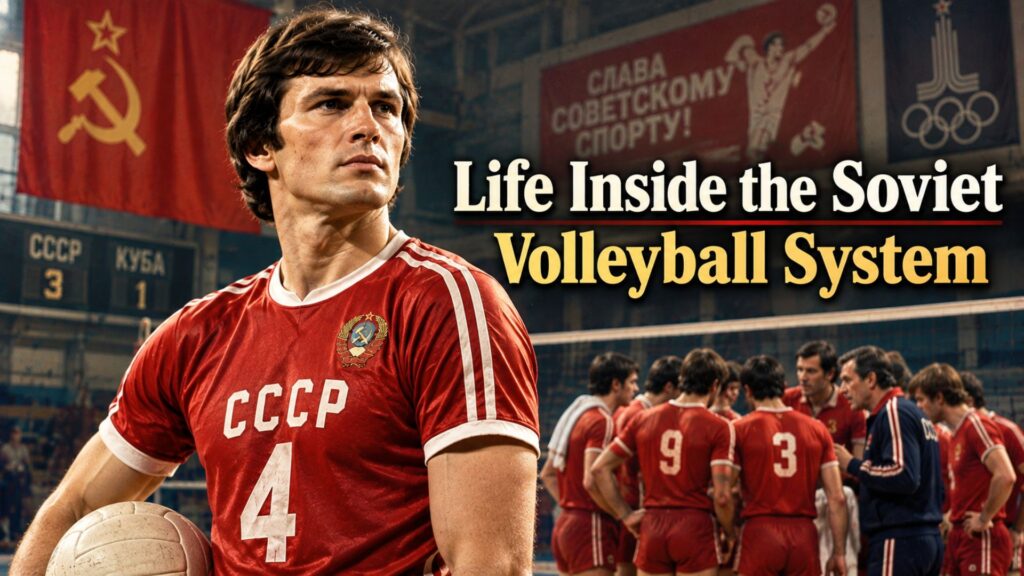
Understanding Savin’s career means understanding the system he trained in.
Centralized Coaching and Development
The Soviet approach to sport wasn’t left to chance. Sporting institutions guided athletes from childhood clubs through national-team competition, with coaches like Yuri Tchesnokov overseeing that 1976 Montreal squad. Coaching in this system wasn’t a side job. It was a career, and it produced results across nearly every Olympic sport, not just volleyball.
Challenges Faced by Elite Athletes
Life at the top wasn’t easy, even with all that institutional support. Psychological pressure ran high, especially with the added weight of representing a nation during the Cold War. Every match carried stakes beyond sport. That kind of pressure tests mental toughness in ways casual players never experience.
The Historical Context of Cold War Sports
You can’t separate Savin’s career from the era he played in.
International Competition During the Soviet Era
The Cold War turned Olympic and world competitions into something bigger than sport. National pride, ideology, and global politics all rode on the outcomes. For Soviet athletes, winning represented far more than personal glory.
Why This Context Matters
Understanding that backdrop makes Savin’s achievements land differently. He wasn’t just competing for a medal. He was competing under a spotlight few modern athletes could imagine, and he delivered anyway.
What Makes Alexander Savin’s Story Worth Knowing
So why does a volleyball career from the 1970s and ’80s still matter to a modern audience?
A Firsthand Piece of Volleyball History
Savin’s career offers a genuine window into Soviet volleyball‘s golden era, one of the most dominant stretches in the sport’s history. Few eras in sports history produced a team this consistently excellent, and Savin stood at the center of it for over a decade.
It Shows the Work Behind the Medal
Strip away the medals, and what’s left is a story about persistence after painful defeat. Montreal’s silver could’ve been the end of the story. Instead, it became the motivation for Moscow’s gold. That’s a lesson that outlasts the sport itself.
Lessons from Alexander Savin’s Career
A few themes run through his story that apply well beyond the volleyball court.
Persistence matters. Losing the 1976 final didn’t end the story. It fueled the next four years of preparation.
Talent needs structure. Raw ability got Savin noticed, but the Soviet sports system‘s advanced training programs turned that ability into something dominant.
Setbacks can become preparation. The Montreal silver wasn’t a failure so much as a lesson the team carried straight into Moscow.
Consistency builds legacies. Eleven years on the national team, and gold medals spread across nearly every major competition, don’t happen through occasional brilliance. They happen through competitive consistency.
The Historical Value of Savin’s Career
Sports historians and volleyball coaches still study this era for good reason.
A Window Into Soviet Sport
Savin’s career offers real insight into how the Soviet Union built athletic dominance across multiple decades. It’s a case study in athlete development that sports scientists and coaches still reference today.
His Place in Volleyball’s Story
The International Volleyball Hall of Fame recognized exactly this when it inducted Savin in 2010. His name sits alongside the sport’s greatest, a permanent marker of what that Soviet team accomplished.
Read More About: Droven.io Cloud Computing Guide: Features, Benefits, Setup & Best Practices for 2026
Who Should Learn About Alexander Savin?
Honestly, this story has something for almost anyone. Volleyball players and volleyball coaches can study the tactical side. Sports historians and Olympic enthusiasts get a rich slice of Cold War-era competition. And anyone interested in what it takes to bounce back from a painful loss will find plenty to sit with here, whether or not they’ve ever touched a volleyball.
Alexander Savin’s Legacy
Savin’s name still carries weight in volleyball circles decades after he last played. The sports school in Obninsk bears his name. His Hall of Fame plaque hangs in Holyoke, Massachusetts, alongside the sport’s other legends. And the Soviet team he anchored still gets discussed as one of the greatest volleyball dynasties ever assembled.
That’s a legacy built the old-fashioned way: through gold, through silver, and through everything it took to turn one into the other.
Frequently Asked Questions
Who is Alexander Savin?
He’s a former Soviet volleyball player, a middle blocker who won Olympic gold in 1980 and silver in 1976, and a 2010 inductee into the International Volleyball Hall of Fame.
What made Savin such a dominant player?
His height, combined with sharp tactical awareness and years of disciplined training within the Soviet sports system, made him one of the most feared blockers of his era.
Did Savin ever coach after retiring?
Public records confirm his Hall of Fame induction and the sports school named after him in Obninsk, though detailed information on a formal post-playing coaching career isn’t well documented in available sources.
Why does Savin’s career matter in volleyball history?
He anchored one of the most dominant national teams in the sport’s history during a politically charged era, making his story both a sporting and historical record.
Is this story relevant beyond volleyball?
Yes. The arc from painful defeat to redemption applies well beyond sport, and it’s part of why his story still gets told.
Final Thoughts
Alexander Savin’s career doesn’t need embellishment to be compelling. A kid from a nuclear-research town in Russia grew into one of the most dominant volleyball players of his generation, lost an Olympic final by the narrowest of margins, then came back four years later and won it all on home soil. That’s a story that holds up on its own facts, no invented details required.