
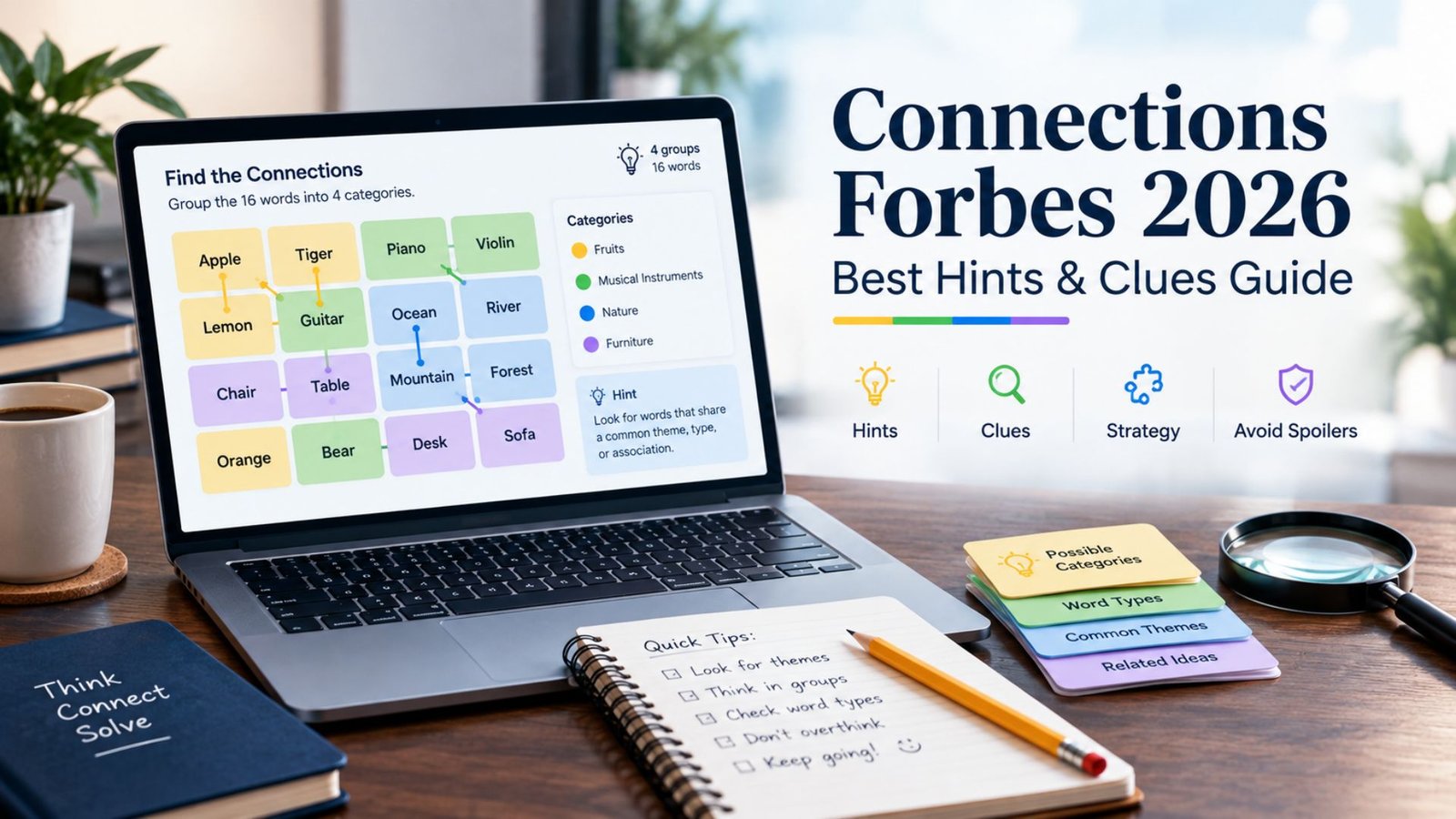
Connections Forbes 2026: Best Hints & Clues Guide
Stuck on the daily Connections puzzle with one mistake left? You’re not alone. Millions of players open the NYT Connections board each morning and hit a wall before breakfast. That’s why Connections 2026 Forbes searches pop up every single day. This guide shows how Forbes Connections hints work and how to use spoiler-free hints wisely. You’ll also pick up solving strategies that protect your daily streak. Grab a coffee and dive in.
What Is Connections Forbes?
Connections Forbes 2026 is Forbes’ daily coverage of the NYT Connections puzzle. It includes Connections hints today, category clues, and Connections answers today. Players use it when the current puzzle board feels too tough. Forbes doesn’t make the game. It simply explains it.
Think of it like a friendly neighbor leaning over the fence. First, you get a nudge. Then you get a clue. Finally, you get the full answer if you ask for it. This layered style makes Forbes hints and answers popular with casual players and serious streak keepers alike.
Who Publishes Forbes Connections Hints?
Forbes contributors write a fresh post each day, titled “NYT Connections Hints And Answers” with the date attached. You can browse the publisher’s site at Forbes. The Forbes daily coverage is independent from the game’s creators, so the tone feels like advice from a fellow player.
What Is the NYT Connections Game?
The Connections game is a word puzzle from The New York Times Games. You get a 16-word grid. Your job is to sort it into four groups of four. Each group shares one shared connection, such as a theme, a phrase, or a clever twist.
The twist is overlap. One word may fit three groups. That’s what makes New York Times Connections feel like a brain teaser instead of a vocabulary quiz. You can play the official version at NYT Games. It joins a lineup of daily word games that many Americans treat like a morning ritual.
How the Daily Puzzle Works
Each day brings a new daily Connections puzzle with 16 fresh entries. You pick four words and hit submit. If the group is right, it locks in with a color. If not, you lose a try. A limited number of mistakes keeps the pressure on.
Insider Gaming notes that players get four mistakes before the game ends. So random guessing is a bad plan. A new board appears at midnight local time, according to Forbes’ daily posts. A guide from yesterday won’t help you today.
Read More About: Reviews About Alaikas com: Legit, Safe, or Scam? Full 2026 Guide
The Four Word Groups Explained
Every board hides four word groups. They show up as color-coded groups: yellow, green, blue, and purple. Each color hints at a puzzle difficulty level. Yellow is usually the friendliest. Purple is usually the trickiest.
Here’s a quick snapshot of the Connections groups.
| Color | Typical Difficulty | Common Link Style |
| Yellow group | Easiest | Direct synonyms or familiar objects |
| Green group | Moderate | Related meanings or shared context |
| Blue group | Challenging | Names, culture, or special uses |
| Purple group | Hardest | Wordplay, hidden links, odd phrases |
Why Color Doesn’t Always Equal Difficulty
A music fan might breeze through a blue group that stumps a sports fan. Your own background shapes the Connections difficulty levels you feel. So treat colors as a loose map. Don’t treat them as a promise.
How Connections Forbes Hints Work
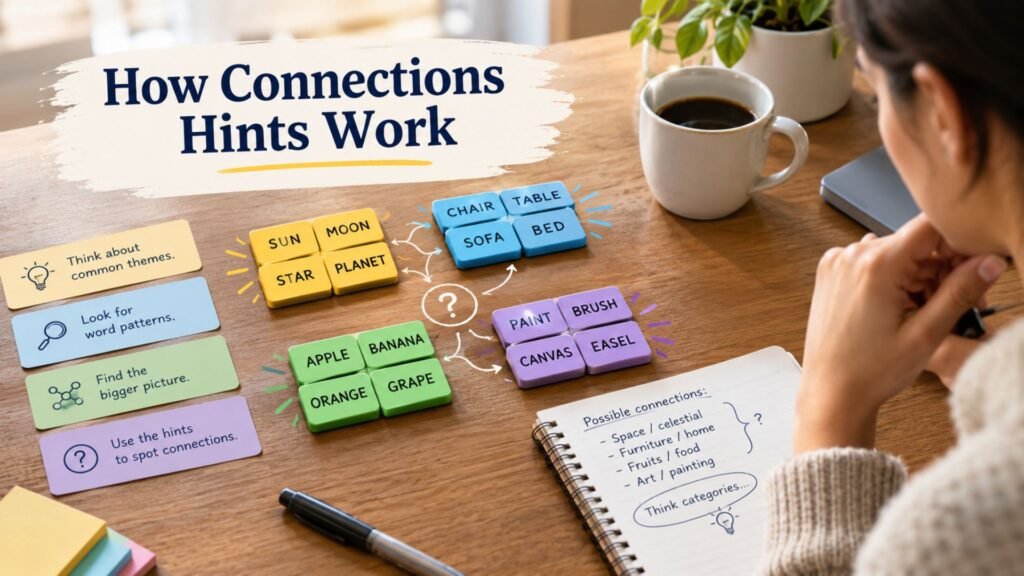
Connections Forbes 2026 posts follow a ladder. The first rung is a general hint. The next rung gives an individual word clue. After that, you see the category name. The last rung shows the full answer. You can step off the ladder at any point.
This design helps you control your daily puzzle experience. Maybe one nudge is enough. Maybe you need two. Either way, the Forbes Connections coverage lets you choose how much help to take. That’s the secret behind its steady popularity.
General Hints Without Spoilers
A good general hint points you toward a theme and stops there. It might say “think breakfast” or “words that follow fire.” You still do the heavy lifting. That’s what keeps spoiler-free assistance fun.
Use this test. If the hint names a word from the current puzzle board, it’s a spoiler. If it only describes a type of link, it’s safe. Keep your eyes on the headline too. Many sites label Connections spoilers in advance so you can look away.
Category Names and Clues
A category name tells you what four words have in common. Some are plain, like “kitchen tools.” Others are sly, like “things with teeth that don’t bite.” Category clues run from literal to cheeky.
Reveal one category and nothing more. This approach follows the idea of revealing one category at a time. Once you know it, cross those four words off in your head. Now the remaining words are easier to read. Often the next link jumps right out.
Complete Answers and Word Groups
Complete answers show all four groups and all 16 words. This is spoiler territory. Forbes labels it clearly, which is a kind gesture. Scroll slowly when you get near that part of a page.
Peeking isn’t a crime. Sometimes a streak matters more than pride. Just try first.
When to Check the Full Answer
Check after you’ve used your best ideas. Then check the logic after solving. Ask why each group works. That habit turns a lost puzzle into a lesson.
Puzzle Analysis and Explanations
Puzzle analysis goes beyond a list of answers. A good write-up explains the misleading alternatives and why they fail. It shows how the editor built the trap. That insight helps you spot similar traps tomorrow.
Here’s a small case study. Picture a mini-board with Palm, Pine, Elm, Oak, Arch, Sole, Heel, and Toe. Palm could be a hand part. Sole could be a fish. Those are red herrings. The intended category is trees for Palm, Pine, Elm, and Oak. The foot parts are Arch, Sole, Heel, and Toe.
Learning From the Red Herrings
Each decoy teaches you something. A red herring looks perfect until a stronger group appears. Study these and your pattern recognition skills grow fast.
Why People Search for Connections Forbes Today
Players want fast help at the right moment. That’s why date-based search queries like “Connections hints today Forbes” are so common. The puzzle resets daily. So the search habit resets too.
Most people look for today’s hints and answers right after waking up. Others search late at night to save a daily streak. Some even hunt for older boards they missed. Forbes’ steady output makes it an easy first stop. You can also compare it with other outlets such as Insider Gaming.
How to Use Connections Forbes Hints Without Spoilers
The best plan is slow and steady. Start small. Add help only when you need it. This keeps your Connections solving experience satisfying. It also keeps Connections spoilers away from your eyes.
A Step-by-Step Spoiler-Safe Routine
First, read the general hint only. Second, stare at the board for a full minute. Third, reveal a single category if you’re still stuck. Finally, save answers for last. This simple routine protects both your pride and your streak.
NYT Connections Difficulty Levels Explained
Connections difficulty levels follow the four colors. Yellow is the easiest category. Green is a moderately easy category. Blue is a challenging category. Purple is the hardest category. Your own knowledge can flip that order, though.
| Level | Color | Feels Like | Typical Trick |
| 1 | Yellow | A warm-up | Obvious common phrases or synonyms |
| 2 | Green | A light stretch | Shared context |
| 3 | Blue | A real test | Cultural references |
| 4 | Purple | A puzzle within a puzzle | Language-level connections |
Yellow: The Easiest Category
The yellow easiest category usually holds the clearest bond. Think plain synonyms or everyday objects. Finding it first shrinks the board from 16 words to 12.
Green: A Moderately Easy Connection
The green moderately easy category asks for a bit more thought. It may rely on a shared setting or a related meaning. Clear yellow first and green often becomes obvious.
Blue: A Challenging Word Relationship
The blue challenging category often leans on proper names or entertainment references. Movies, bands, and teams show up here. Broad general knowledge pays off.
Purple: The Hardest and Most Creative Category
The purple hardest category loves wordplay. Expect prefixes and suffixes, hidden words, or odd sounds. Don’t panic. By the time you reach it, only four words are left.
Common Types of NYT Connections Categories
Connections categories can cover almost anything. Most fall into a handful of families. Knowing them helps you scan faster. The table below lists the usual suspects.
| Category Type | What to Look For | Quick Example |
| Synonyms | Words with close meanings | Glad, happy, merry, cheerful |
| Wordplay | Double meanings or hidden twists | Words hiding body parts |
| Proper nouns | Names, brands, places | Famous chefs |
| Common phrases | Words that pair with one term | ___ light: moon, day, green, spot |
The same board can mix all four. So stay flexible.
Synonyms and Related Words
Synonyms are the easiest family to spot. Still, be careful. Close meanings often overlap across groups. That’s a favorite trick of the puzzle makers.
Wordplay and Double Meanings
Wordplay rewards alternate definitions. A word may work as a verb in one group and a noun in another. Always test the second meaning.
Proper Nouns and Names
Proper nouns hide in plain sight. A plain-looking word may be a singer, a city, or a character. Check for capital-letter possibilities.
Phrases and Common Expressions
Common expressions work by adding a shared word before or after. Try one word next to each entry. A hidden phrase may pop up. These phrase structures are a classic purple move.
How to Solve NYT Connections Faster
Speed comes from pattern recognition, not rushing. Good solving strategies test several ideas before you submit. Use elimination to clear the board. Start with the strongest relationship. Then repeat.
Picture it as a loop. Find a group. Lock it. Reassess. Repeat. Each lock removes clutter and sharpens your critical thinking.
Find the Most Obvious Group First
Look for four words with an unusually tight link. That’s your obvious group. Solve it, then eliminate confirmed words from your mind.
Look for Multiple Meanings
Ask whether a word has a second life. Multiple meanings often unlock a stubborn group. Slang counts too.
Watch for Red Herrings
A red herring tempts you into a wrong group. Before submitting, check that all four words fit equally well. If one feels forced, keep hunting.
Rearrange and Compare the Words
Tap the shuffle option. A new layout can reveal fresh patterns. Compare words by spelling patterns, sound, and length too.
Eliminate Weak Connections
If one group has four clean matches and another leans on a shaky word, pick the clean one. Learning to eliminate weak connections saves attempts.
Save Unusual Words for Last
Odd entries can wait. Once the other groups lock in, unusual words often explain themselves.
Common NYT Connections Mistakes to Avoid
Most Connections mistakes come from speed. You see a link. You submit. Then the game punishes you. A calmer pace works better. Check the fourth word every time. One weak match can signal a trap.
If one word needs an explanation, keep looking.
| Mistake | Why It Hurts | Better Move |
| Rushing | Wastes limited attempts | Test the fourth word |
| Ignoring other meanings | Misses alternate meanings | Try a second definition |
| Skipping wordplay | Misses language-level connections | Check spelling and sounds |
| Forgetting names | Misses proper names | Scan for people and places |
| Early guessing | Burns tries | Eliminate first |
Rushing Into an Obvious Group
An obvious group isn’t always the right one. The game plants misleading alternatives on purpose. Slow down and verify.
Ignoring Alternate Meanings
The first definition is rarely the only one. Consider verbs, slang, and names. This matters most when many words seem to share one topic.
Overlooking Wordplay
Some players hunt only for meaning. That makes wordplay nearly invisible. Look at letters, endings, and sounds as well.
Forgetting Proper Nouns
A plain word may be a title, a team, or a song. Treat capitalized possibilities as real options.
Guessing Too Early
Each wrong try costs you. Submit only when you can explain why all four words belong together.
Benefits of Playing Connections Daily
Playing the daily Connections puzzle offers light mental exercise. It’s no miracle cure. Still, steady play builds flexible thinking and keeps your mind curious. You compare ideas, test them, and adjust.
Think of it as a short jog for your brain. You won’t win a marathon from one lap. Yet a daily habit adds up, and it feels good.
Vocabulary and Word Recognition
The Connections game exposes you to rare words and clever phrases. Over time, your vocabulary recognition improves. You start noticing odd meanings everywhere.
Critical Thinking and Pattern Recognition
You must weigh rival ideas and pick the best one. That sharpens critical thinking. Your pattern recognition gets quicker too.
Problem-Solving Skills
Breaking a big grid into small steps is real problem-solving. Gather evidence. Drop weak options. Reassess. That habit works well in daily life.
Read More About: Who Is Bianca Beets? The Story of Tony Beets’ Daughter and Her Private Life
Where to Find Daily Connections Hints and Answers
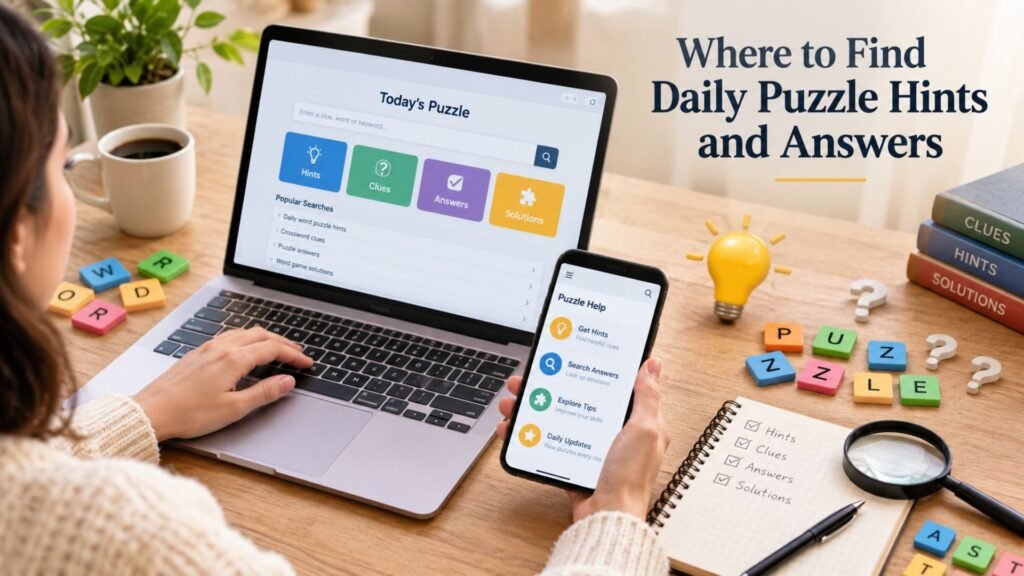
The official puzzle lives at The New York Times Games. Hints and daily Connections answers live on many sites. Always check the date first. A mismatched date means a mismatched puzzle.
Quality matters as well. Pick pages that clearly label Connections spoilers. That way you control what you see.
The Official NYT Games Page
Play the real game at NYT Games. It tracks your daily streak and stats. Start here every day.
Forbes Daily Hint Articles
Search “NYT Connections Hints And Answers” plus today’s date. The Forbes hints and answers post should appear near the top. Read it in layers.
Other Hint Sites
Outlets such as Insider Gaming also publish Connections puzzle hints. Comparing two guides can clear up a confusing board.
FAQs
Here are quick answers to common questions about Connections Forbes. Each one is short on purpose. Use them as a fast reference when the current puzzle board has you stumped.
Does Forbes create the NYT Connections puzzle?
No. The New York Times Games team creates the puzzle. Forbes writes independent Connections guide posts.
How many mistakes do you get in Connections?
You get four mistakes. After the fourth, the game ends and the answers appear.
When does the new Connections puzzle appear?
A new board goes live at midnight local time. Players in different time zones get it at different moments.
Are Connections hints cheating?
No. Most players see hints as a learning tool. Take small steps and you’ll still earn the win.
Can you find Connections Forbes hints without seeing the answers?
Yes. Read only the early general hint and stop before the spoiler territory begins.
Conclusion
Connections Forbes guides work best as a ladder. Start with a general hint. Reveal one category if you must. Save answers for last. Then check the logic after solving so every board teaches you something.
Keep these Connections solving tips close. Watch for red herrings. Use the shuffle option. Trust your strongest connections. Check the date, play at NYT Games, and enjoy the Connections 2026 ride.

Ryan Cooper is a dedicated writer with a passion for creating informative and engaging content. He enjoys sharing valuable insights and helping readers stay updated with the latest trends and practical knowledge.





One Comment